
















Copyright: ©Author(s) 2026.
World J Diabetes. Apr 15, 2026; 17(4): 114679
Published online Apr 15, 2026. doi: 10.4239/wjd.v17.i4.114679
Published online Apr 15, 2026. doi: 10.4239/wjd.v17.i4.114679
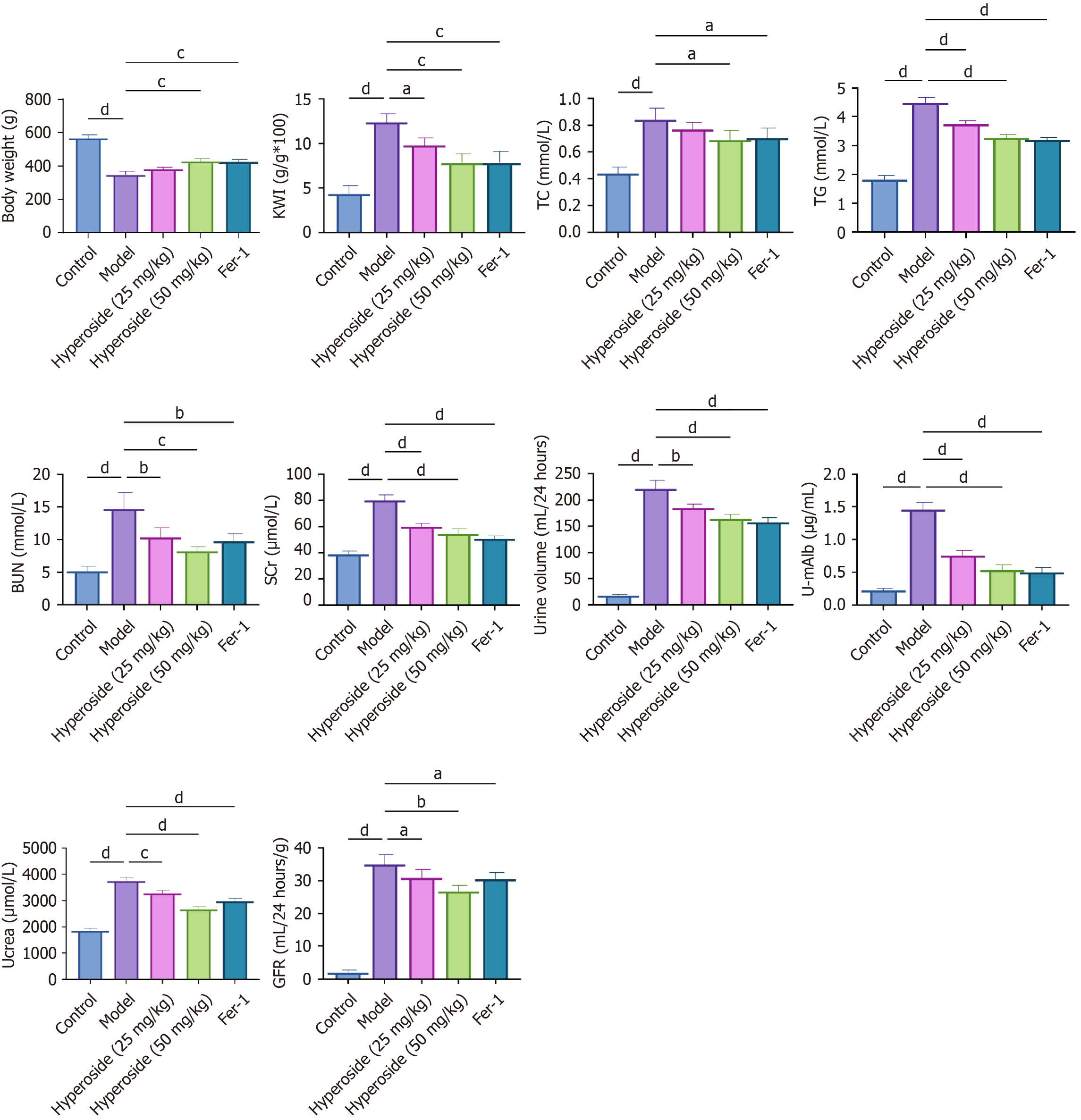
Figure 6 Hyperoside improves dyslipidemia and renal function in diabetic nephropathy rats.
aP < 0.05, bP < 0.01, cP < 0.001, dP < 0.001. One-way analysis of variance + Tukey’s post hoc test; two-sided. Data are expressed as the mean ± SD; n = 6 rats per group. Body weight, kidney weight index, serum total cholesterol, triglycerides, serum creatinine, blood urea nitrogen, 24-hour urinary albumin excretion, and renal glutathione in the control, diabetic nephropathy (DN) model, DN + hyperoside (25 mg/kg or 50 mg/kg), and DN + ferrostatin-1 (1 mg/kg) groups. KWI: Kidney weight index; TC: Total cholesterol; TG: Triglycerides; Scr: Serum creatinine; BUN: Blood urea nitrogen; UAE: Urinary albumin excretion; Fer-1: Ferrostatin-1; U-mAlb: Urinary microalbumin; GFR: Glomerular filtration rate.
- Citation: Liu C, Li Y, Zhang Y, Gao M, Yang SF. Hyperoside attenuates diabetic nephropathy by activating the Nrf2/SLC7A11/GPX4 axis to restrain ferroptosis. World J Diabetes 2026; 17(4): 114679
- URL: https://www.wjgnet.com/1948-9358/full/v17/i4/114679.htm
- DOI: https://dx.doi.org/10.4239/wjd.v17.i4.114679