
















Copyright: ©Author(s) 2026.
World J Diabetes. Mar 15, 2026; 17(3): 113249
Published online Mar 15, 2026. doi: 10.4239/wjd.v17.i3.113249
Published online Mar 15, 2026. doi: 10.4239/wjd.v17.i3.113249
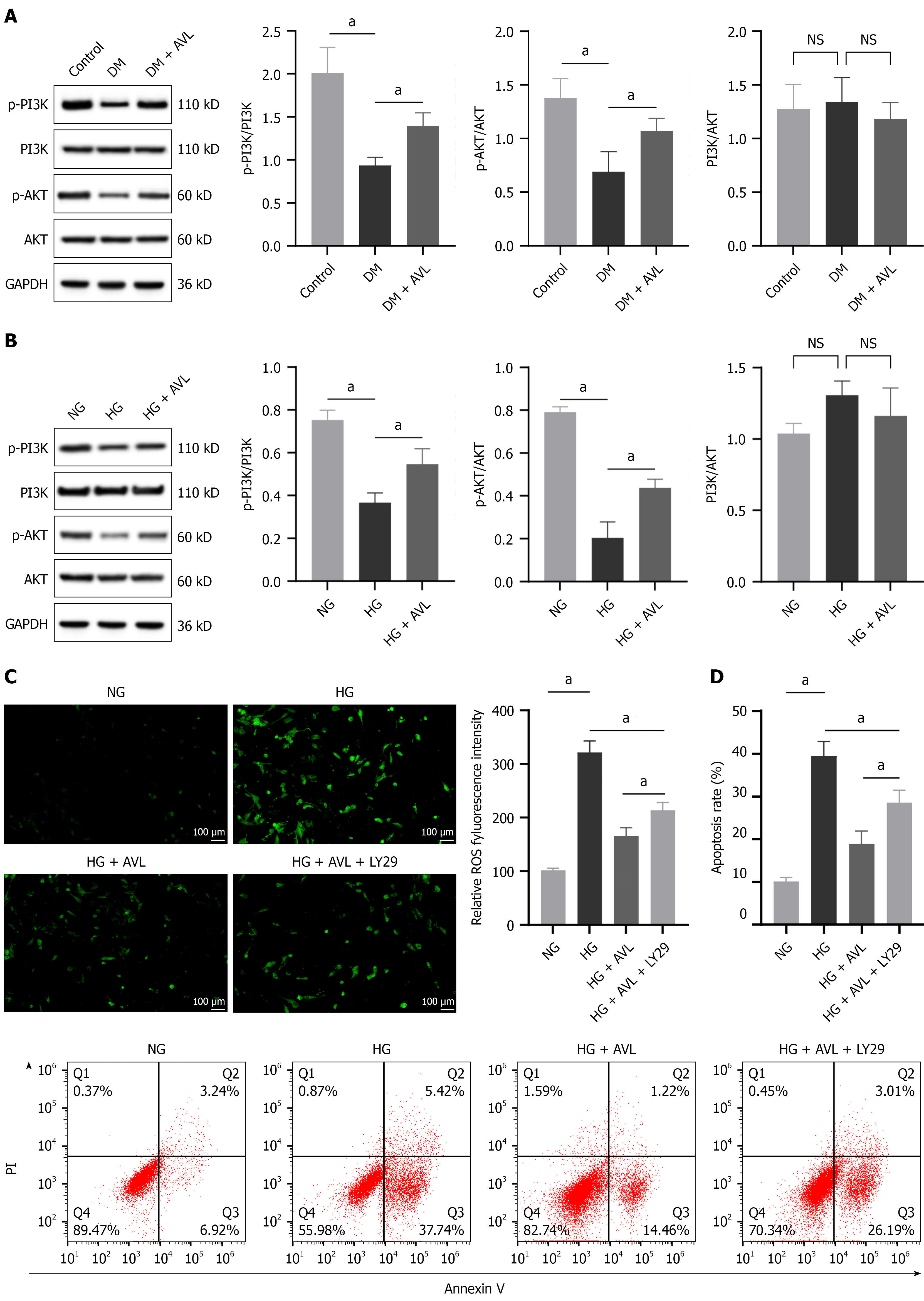
Figure 5 Amomum villosum Lour.
treatment inhibited oxidative stress and apoptosis in the dorsal root ganglion of diabetic rats by activating the phosphoinositide 3-kinase/AKT signaling pathway. A: Protein levels of phosphorylated phosphoinositide 3-kinase (p-PI3K) and phosphorylated AKT (p-AKT) in dorsal root ganglion (DRG) were analyzed by Western blotting; B: Protein levels of p-PI3K and p-AKT in primary DRG neurons were analyzed by Western blotting; C: Primary DRG neurons were pre-treated with 0.5 μM LY294002 for 2 hours, and then incubated with high glucose (HG) and Amomum villosum Lour. (AVL). The reactive oxygen species levels in primary DRG neurons were analyzed by immunofluorescence; D: Apoptosis proportion of primary DRG neurons was analyzed by flow cytometry. aP < 0.05; DM: Diabetes mellitus; NG: Normal glucose; NS: Not significant; PI: Propidium iodide.
- Citation: Kou DQ, Liu MJ, Gao XL, Guo FR. Amomum villosum extract alleviates diabetic neuropathy via phosphoinositide 3-kinase/AKT-mediated antioxidative and anti-apoptotic effects. World J Diabetes 2026; 17(3): 113249
- URL: https://www.wjgnet.com/1948-9358/full/v17/i3/113249.htm
- DOI: https://dx.doi.org/10.4239/wjd.v17.i3.113249