
















Copyright: ©Author(s) 2026.
World J Diabetes. Mar 15, 2026; 17(3): 112177
Published online Mar 15, 2026. doi: 10.4239/wjd.v17.i3.112177
Published online Mar 15, 2026. doi: 10.4239/wjd.v17.i3.112177
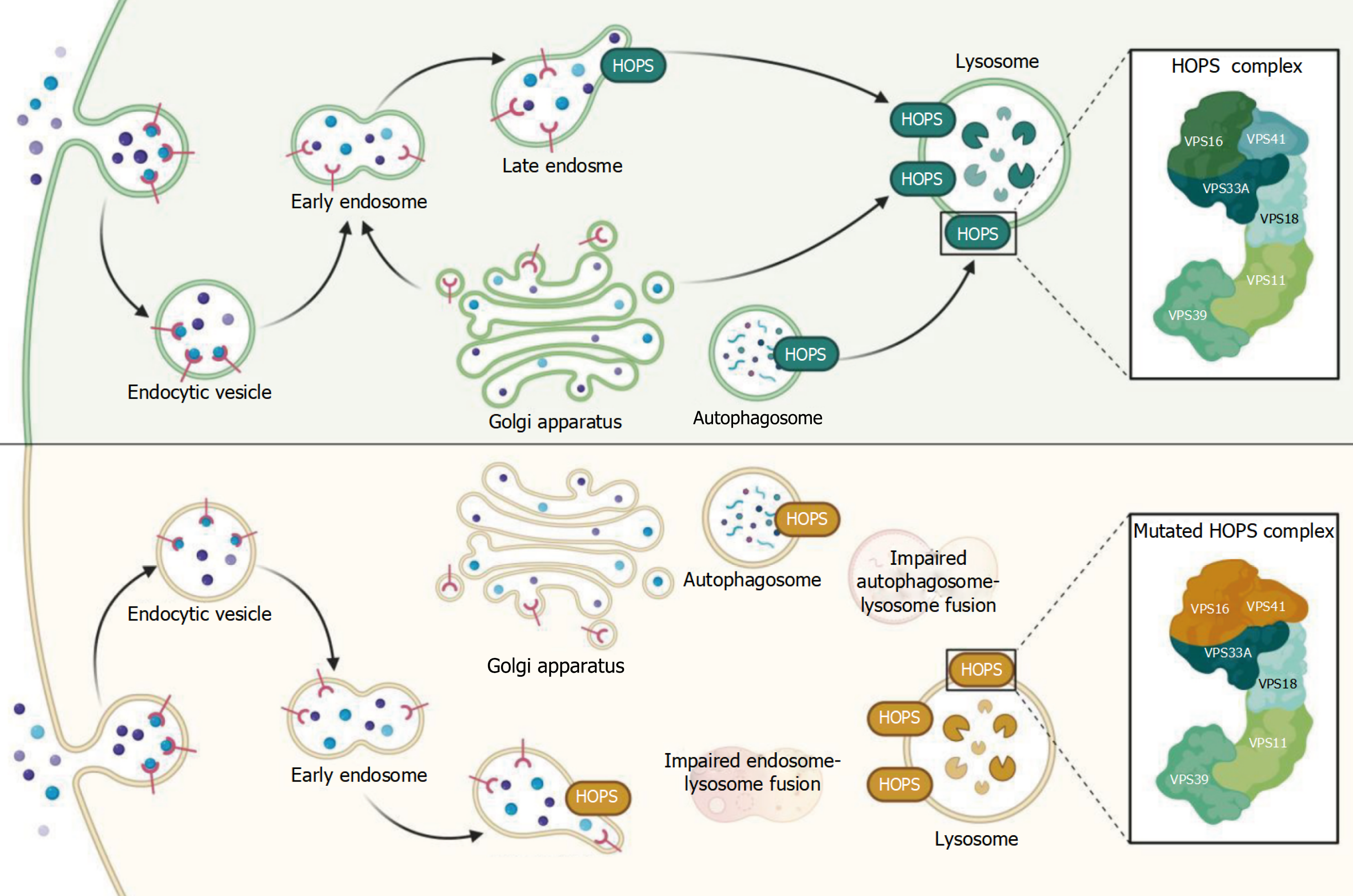
Figure 5 The homotypic fusion and protein sorting complex functions in autophagy-lysosome system fusion and diabetes pathogenesis.
The diagram illustrates the critical role of the homotypic fusion and protein sorting (HOPS) complex in lysosomal fusion processes under normal and pathological conditions (upper panel). The normal HOPS complex facilitates proper vesicle trafficking and fusion events, including endocytic vesicle maturation through early and late endosomes and successful autophagosome-lysosome fusion to form autolysosomes for cargo degradation. The intact HOPS complex (shown in detail on the right) contains multiple subunits that coordinate membrane tethering and fusion (lower panel). Mutating the HOPS complex results in impaired autophagosome-lysosome fusion, leading to the accumulation of undigested autophagosomes and defective lysosomal function. This dysfunction disrupts cellular quality control mechanisms and may contribute to diabetes pathogenesis by affecting pancreatic β-cell autophagy, insulin secretion, and glucose metabolism. HOPS complex mutations represent a potential link between autophagy dysfunction and diabetes development, although the specific connections to neuronal and skin mitophagy in diabetic complications require further investigation. This figure was created by BioRender.com (Supplementary material).
- Citation: Chen X, Zhang LL, Zhou Y, Dong DX, Qian XY. Mitochondrial autophagy in diabetes-related cognitive decline and skin ulcers: Mechanistic insights and therapeutic implications. World J Diabetes 2026; 17(3): 112177
- URL: https://www.wjgnet.com/1948-9358/full/v17/i3/112177.htm
- DOI: https://dx.doi.org/10.4239/wjd.v17.i3.112177