
















©The Author(s) 2026.
World J Diabetes. Feb 15, 2026; 17(2): 112500
Published online Feb 15, 2026. doi: 10.4239/wjd.v17.i2.112500
Published online Feb 15, 2026. doi: 10.4239/wjd.v17.i2.112500
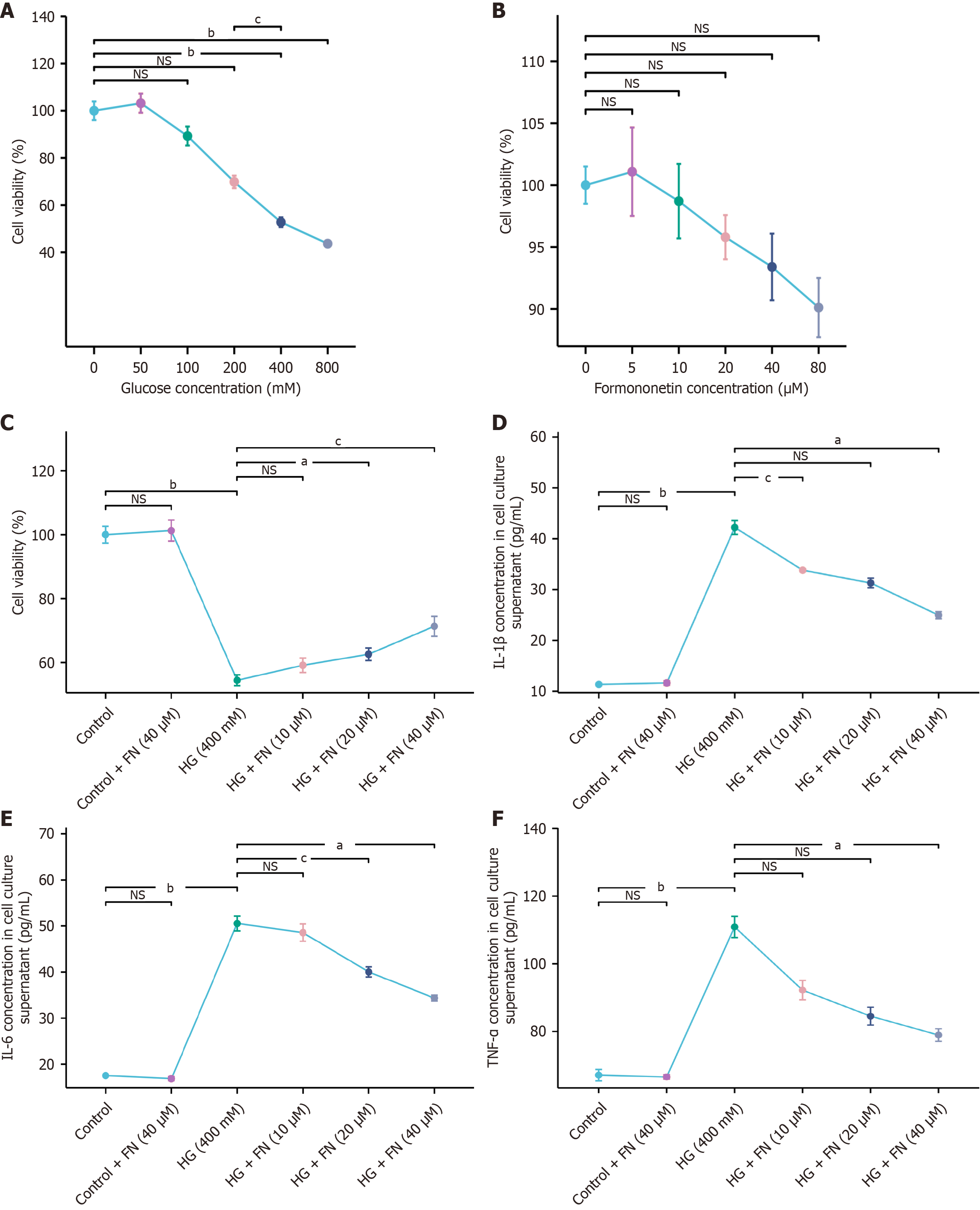
Figure 1 Formononetin intervention dose-dependently increases the viability of high glucose-exposed MPC-5 cells.
A: MPC-5 cells were treated with 0 mmol/L, 50 mmol/L, 100 mmol/L, 200 mmol/L, 400 mmol/L, or 800 mmol/L of glucose for 24 hours to determine a suitable high glucose (HG) concentration. 3-(4,5-dimethyl-2-thiazolyl)-2,5-diphenyl-2H-tetrazolium bromide (MTT) assay revealed that 400 mmol/L of glucose reduced MPC-5 cell viability by approximately 50%, making it suitable for inducing cell injury; B: MPC-5 cells were treated with 0 μM, 5 μM, 10 μM, 20 μM, 40 μM, or 80 μM of formononetin (FN) for 24 hours to determine non-toxic doses. MTT assay showed that FN concentrations below 40 μM did not significantly affect cell viability, so 10 μM, 20 μM, and 40 μM FN were selected for subsequent experiments; C: FN intervention dose-dependently increases viability of HG-exposed MPC-5 cells; D-F: FN intervention reduces levels of interleukin-1β (D), interleukin-6 (E), and tumor necrosis factor α (F) in the culture supernatant of HG-exposed MPC-5 cells. Data are presented as means ± SD and n = 6 for A-C, n = 3 for D-F. aP < 0.01 vs high glucose groups; bP < 0.01 vs control group; cP < 0.05 vs high glucose groups. NS: Not significant; FN: Formononetin; HG: High glucose; IL-1β: Interleukin-1β; IL-6: Interleukin-6; TNF-α: Tumor necrosis factor α.
- Citation: Ji Y, Liu RX, He PY, Zhou YM, Li YC, Guo J, Nie B, Liu YN, Liu WJ. Formononetin inhibits p53 signaling pathway activation to delay cellular senescence and ameliorates diabetic kidney disease. World J Diabetes 2026; 17(2): 112500
- URL: https://www.wjgnet.com/1948-9358/full/v17/i2/112500.htm
- DOI: https://dx.doi.org/10.4239/wjd.v17.i2.112500