










BPG is committed to discovery and dissemination of knowledge
Minireviews
Copyright: ©Author(s) 2026.
World J Diabetes. Nov 15, 2026; 17(11): 125802
Published online Nov 15, 2026. doi: 10.4239/wjd.125802
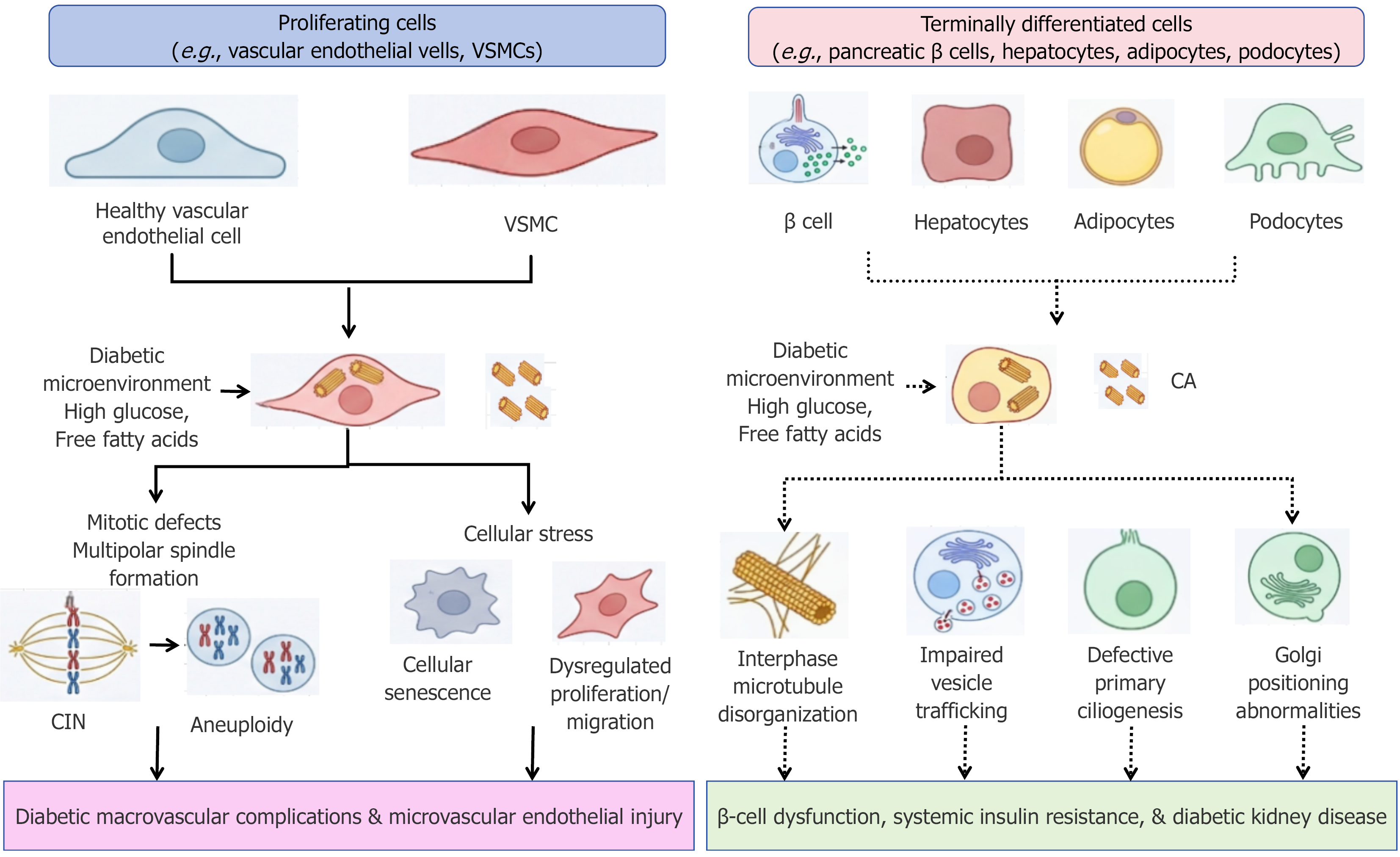
Figure 2
Figure 2 Distinct pathogenic effects of centrosome amplification in proliferating vs terminally differentiated cells. The functional consequences of centrosome amplification (CA) are highly dependent on cell cycle status. In proliferating vascular cells (endothelial cells and vascular smooth muscle cells), CA primarily induces mitotic defects including multipolar spindle formation, chromosomal instability and aneuploidy, as well as cellular senescence and dysregulated proliferation/migration, which collectively drive diabetic macrovascular complications and microvascular endothelial injury. In terminally differentiated metabolic parenchymal cells (pancreatic β-cells, hepatocytes, adipocytes, and podocytes), CA exerts pathogenic effects mainly through disrupting interphase microtubule organization, intracellular vesicle trafficking, primary ciliogenesis, and Golgi positioning, contributing to β-cell dysfunction, systemic insulin resistance, and diabetic kidney disease. Solid black arrow: Supported by in vitro primary-cell experimental evidence; Grey dashed arrow: Hypothesized pathogenic cascade without direct evidence from metabolic tissues. VSMC: Vascular smooth muscle cell; CA: Centrosome amplification; CIN: Chromosomal instability.


Write to the Help Desk