
















Copyright: ©Author(s) 2026.
World J Diabetes. Nov 15, 2026; 17(11): 124042
Published online Nov 15, 2026. doi: 10.4239/wjd.124042
Published online Nov 15, 2026. doi: 10.4239/wjd.124042
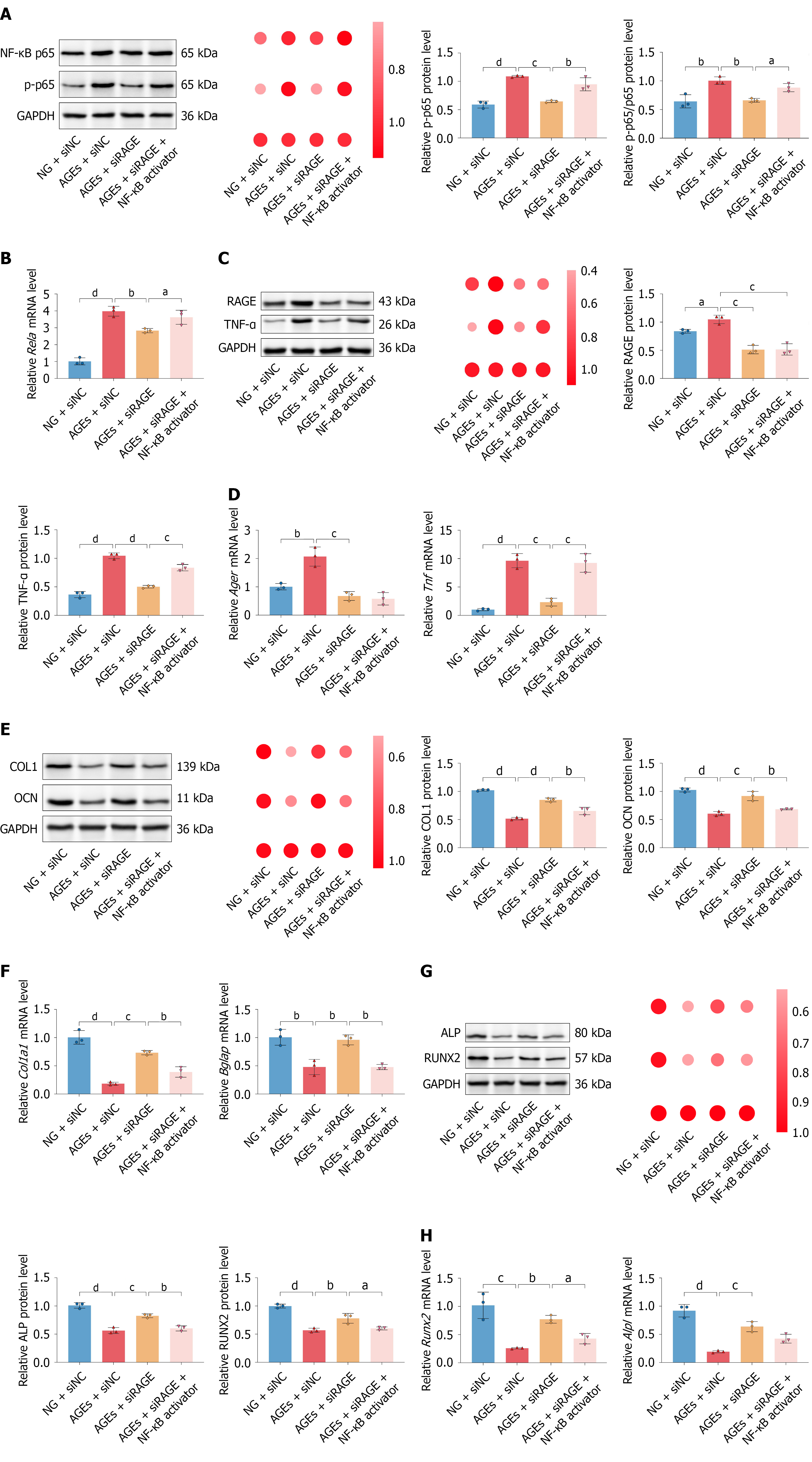
Figure 6 Receptor for advanced glycation end products knockdown and phorbol 12-myristate 13-acetate stimulation support pathway-associated responses during advanced glycation end product-modified bovine serum albumin exposure.
MC3T3-E1 cells were assigned to normal-glucose + negative-control small interfering RNA (siNC), advanced glycation end product-modified bovine serum albumin (AGE-BSA) + siNC, AGE-BSA + receptor for advanced glycation end products (RAGE)-targeting small interfering RNA (siRAGE), or AGE-BSA + siRAGE + phorbol 12-myristate 13-acetate (PMA) (100 nmol/L; treatment duration reported in the materials and methods) groups. A: Western blotting, relative-expression heatmap, and densitometric analysis of total p65, phosphorylated p65 (p-p65), and the p-p65/p65 ratio. RAGE knockdown reduced AGE-BSA-associated p65 phosphorylation, whereas PMA increased p65 phosphorylation after RAGE knockdown; B: Quantitative polymerase chain reaction analysis of Rela expression; C: Western blotting, relative-expression heatmap, and densitometric analysis of RAGE and tumor necrosis factor alpha (TNF-α). PMA did not restore RAGE expression but increased TNF-α expression after RAGE knockdown; D: Quantitative polymerase chain reaction analysis of Ager and Tnf expression; E: Western blotting and densitometric analysis of collagen I and osteocalcin expression; F: Quantitative polymerase chain reaction analysis of Col1a1 and Bglap expression; G: Western blotting and densitometric analysis of alkaline phosphatase and runt-related transcription factor 2 expression; H: Quantitative polymerase chain reaction analysis of Alpl and Runx2 expression. RAGE knockdown increased the measured osteogenic markers, whereas PMA partially attenuated their recovery. Data are presented as the mean ± SD from three independent biological experiments (n = 3). Technical replicate measurements were averaged within each experiment. Multiple-group comparisons were performed using one-way analysis of variance followed by Tukey’s multiple-comparisons test. PMA was used as a pleiotropic stimulus capable of engaging nuclear factor kappa B (NF-κB)-associated signaling, not as a selective NF-κB agonist. Nuclear p65 translocation and nuclear/cytoplasmic fractionation were not evaluated. Ganagliflozin proline was absent from this experiment; therefore, these results do not establish that RAGE/NF-κB-associated signaling mediates its protective effects. Uncropped Western blot source images are provided in the Supplementary material. aP < 0.05. bP < 0.01. cP < 0.001. dP < 0.0001. GAPDH: Glyceraldehyde-3-phosphate dehydrogenase; NF-κB: Nuclear factor kappa B; p-p65: Phosphorylated p65; NG: Normal-glucose; AGE: Advanced glycation end product; siNC: Negative-control small interfering RNA; siRAGE: Receptor for advanced glycation end products-targeting small interfering RNA; RAGE: Receptor for advanced glycation end products; TNF-α: Tumor necrosis factor alpha; mRNA: Messenger RNA; OCN: Osteocalcin; COL1: Collagen I; ALP: Alkaline phosphatase; RUNX2: Runt-related transcription factor 2.
- Citation: Li ZP, Li H, Xu JL, Liu YJ, Li D, Wang P, Xiang L, Xu SY, Duan CZ, Wang SX, Sun JK, Zhang CJ, He DJ, Luo C. Ganagliflozin proline attenuates osteogenic dysfunction and inflammatory signaling during exposure to advanced glycation end products in murine osteoblasts. World J Diabetes 2026; 17(11): 124042
- URL: https://www.wjgnet.com/1948-9358/full/v17/i11/124042.htm
- DOI: https://dx.doi.org/10.4239/wjd.124042