
















Copyright: ©Author(s) 2026.
World J Diabetes. Nov 15, 2026; 17(11): 124042
Published online Nov 15, 2026. doi: 10.4239/wjd.124042
Published online Nov 15, 2026. doi: 10.4239/wjd.124042
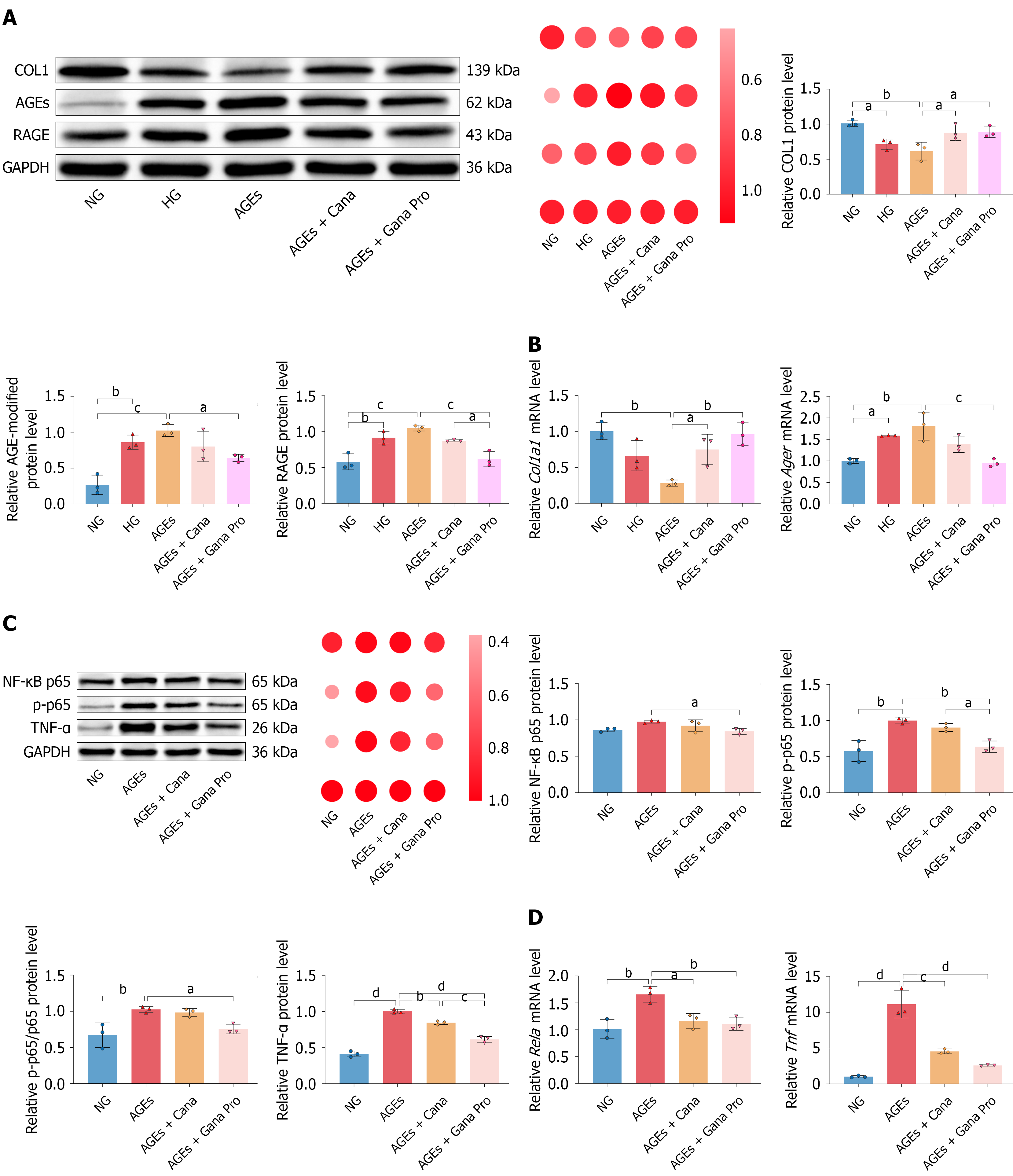
Figure 4 Ganagliflozin proline restores collagen I expression and reduces inflammatory readouts during advanced glycation end product-modified bovine serum albumin exposure.
A: Western blotting, relative-expression heatmap, and densitometric analysis of collagen I (COL1), advanced glycation end product (AGE)-modified protein immunoreactivity, and the receptor for advanced glycation end products (RAGE). MC3T3-E1 cells were cultured under normal-glucose, high-glucose, AGE-bovine serum albumin (BSA), AGE-BSA + canagliflozin (10 μmol/L), or AGE-BSA + ganagliflozin proline (Gana Pro) (5 μmol/L) conditions. Glyceraldehyde-3-phosphate dehydrogenase was the loading control. Compared with AGE-BSA alone, Gana Pro increased COL1 expression and reduced anti-AGE immunoreactivity and RAGE expression. The anti-AGE signal represents overall AGE-modified protein immunoreactivity and does not measure COL1-specific glycation or crosslinking; B: Quantitative polymerase chain reaction analysis of Col1a1 and Ager expression. Gana Pro increased Col1a1 expression and reduced Ager expression compared with AGE-BSA alone; C: Western blotting, heatmap, and densitometric analysis of nuclear factor kappa B (NF-κB) p65, phosphorylated p65 (p-p65), the p-p65/p65 ratio, and tumor necrosis factor alpha (TNF-α). Compared with AGE-BSA alone, Gana Pro reduced p-p65, the p-p65/p65 ratio, and TNF-α expression; D: Quantitative polymerase chain reaction analysis of Rela and Tnf expression. The high-glucose comparison lacked a mannitol or L-glucose osmotic control. The observed reductions in inflammatory readouts do not establish that RAGE/NF-κB signaling mediates the effects of Gana Pro. Uncropped Western blot source images are provided in the Supplementary material. Data are presented as the mean ± SD from three independent biological experiments (n = 3). Technical replicate measurements were averaged within each experiment. Multiple-group comparisons were performed using one-way analysis of variance followed by Tukey’s multiple-comparisons test. aP < 0.05. bP < 0.01. cP < 0.001. dP < 0.0001. COL1: Collagen I; AGE: Advanced glycation end product; RAGE: Receptor for advanced glycation end products; GAPDH: Glyceraldehyde-3-phosphate dehydrogenase; NG: Normal-glucose; HG: High-glucose; Cana: Canagliflozin; Gana Pro: Ganagliflozin proline; NF-κB: Nuclear factor kappa B; p-p65: Phosphorylated p65; TNF-α: Tumor necrosis factor alpha; mRNA: Messenger RNA.
- Citation: Li ZP, Li H, Xu JL, Liu YJ, Li D, Wang P, Xiang L, Xu SY, Duan CZ, Wang SX, Sun JK, Zhang CJ, He DJ, Luo C. Ganagliflozin proline attenuates osteogenic dysfunction and inflammatory signaling during exposure to advanced glycation end products in murine osteoblasts. World J Diabetes 2026; 17(11): 124042
- URL: https://www.wjgnet.com/1948-9358/full/v17/i11/124042.htm
- DOI: https://dx.doi.org/10.4239/wjd.124042