
















Copyright: ©Author(s) 2026.
World J Diabetes. Nov 15, 2026; 17(11): 124042
Published online Nov 15, 2026. doi: 10.4239/wjd.124042
Published online Nov 15, 2026. doi: 10.4239/wjd.124042
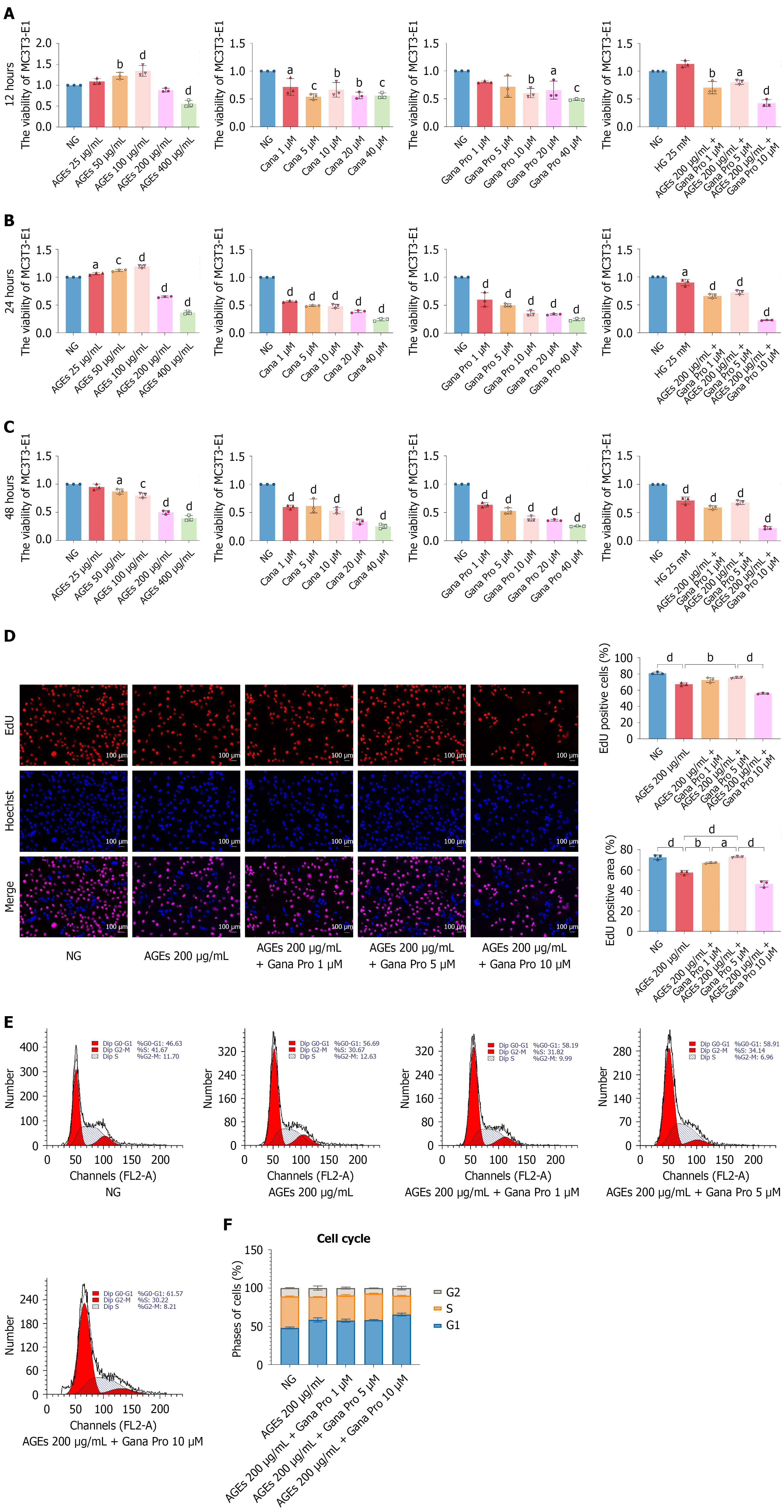
Figure 3 Concentration screening and proliferative responses to ganagliflozin proline during advanced glycation end product-modified bovine serum albumin exposure.
A-C: Cell counting kit-8 metabolic-activity measurements after 12 hours, 24 hours, and 48 hours, respectively. MC3T3-E1 cells were exposed to commercial advanced glycation end product-modified bovine serum albumin (AGE-BSA) (25-400 μg/mL total protein), canagliflozin (1-40 μmol/L), or ganagliflozin proline (Gana Pro) (1-40 μmol/L). Additional groups received 200 μg/mL AGE-BSA with 1 μmol/L, 5 μmol/L, or 10 μmol/L Gana Pro. The single-agent drug series evaluated concentration-associated effects on metabolic activity and did not constitute a comprehensive safety assessment. Based on the combined concentration-screening results, 5 μmol/L Gana Pro was selected as the working concentration for subsequent experiments; it was not defined as universally optimal; D: Representative 5-ethynyl-2’-deoxyuridine (EdU) images and quantification in the normal-glucose, AGE-BSA, AGE-BSA + 1 μmol/L Gana Pro, AGE-BSA + 5 μmol/L Gana Pro, and AGE-BSA + 10 μmol/L Gana Pro groups. EdU-positive nuclei are red, and Hoechst 33342-stained nuclei are blue. AGE-BSA exposure was associated with reduced EdU incorporation, whereas 5 μmol/L Gana Pro increased the EdU-positive proportion; E: Representative propidium iodide DNA-content histograms for the corresponding groups; F: Percentages of cells in the G0/G1, S, and G2/M phases. AGE-BSA exposure was associated with increased G0/G1-phase accumulation and reduced S-phase representation. Treatment with 5 μmol/L Gana Pro partially restored S-phase representation. Data are presented as the mean ± SD from three independent biological experiments (n = 3). Technical replicate wells were averaged within each experiment and were not treated as independent observations. Multiple-group comparisons were performed using one-way analysis of variance followed by Tukey’s multiple-comparisons test. The AGE-BSA preparation lacked a matched unmodified BSA control, and its endotoxin content was not analyzed. Gana Pro-only groups were included in the metabolic-activity screen but not in the downstream molecular and osteogenic assays. aP < 0.05. bP < 0.01. cP < 0.001. dP < 0.0001. For panels A-C, statistical comparisons were made against the corresponding normal-glucose group within each experimental series at the same time point. NG: Normal-glucose; HG: High-glucose; AGE: Advanced glycation end product; Cana: Canagliflozin; Gana Pro: Ganagliflozin proline; EdU: 5-ethynyl-2’-deoxyuridine.
- Citation: Li ZP, Li H, Xu JL, Liu YJ, Li D, Wang P, Xiang L, Xu SY, Duan CZ, Wang SX, Sun JK, Zhang CJ, He DJ, Luo C. Ganagliflozin proline attenuates osteogenic dysfunction and inflammatory signaling during exposure to advanced glycation end products in murine osteoblasts. World J Diabetes 2026; 17(11): 124042
- URL: https://www.wjgnet.com/1948-9358/full/v17/i11/124042.htm
- DOI: https://dx.doi.org/10.4239/wjd.124042