
















Copyright: ©Author(s) 2026.
World J Diabetes. Nov 15, 2026; 17(11): 124042
Published online Nov 15, 2026. doi: 10.4239/wjd.124042
Published online Nov 15, 2026. doi: 10.4239/wjd.124042
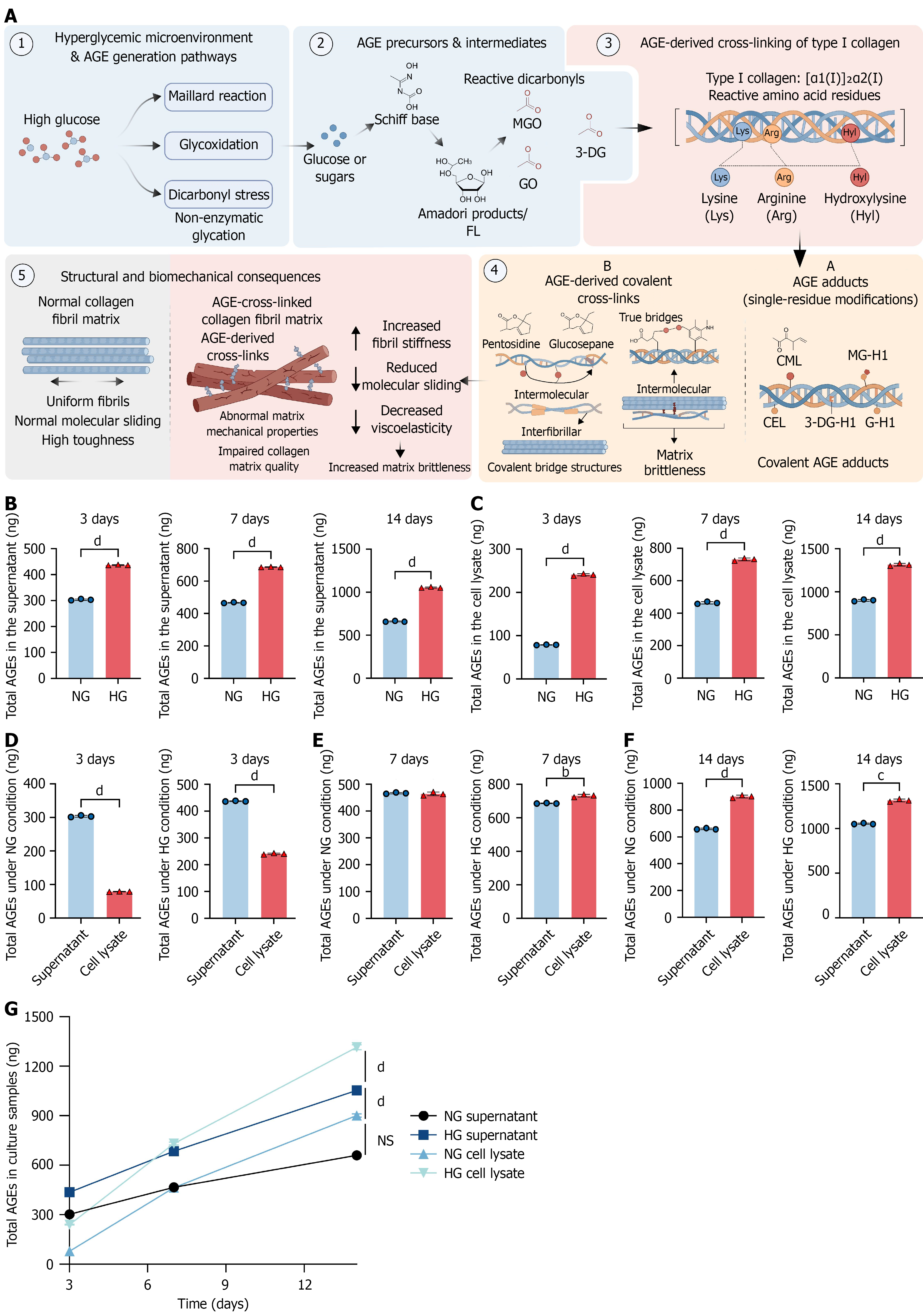
Figure 1 Advanced glycation end product levels under normal- and high-glucose culture conditions in MC3T3-E1 cells.
A: Conceptual schematic showing biochemical routes by which a high-glucose environment may favor advanced glycation end product (AGE) formation and type I collagen modification. Schiff bases, Amadori products, methylglyoxal, glyoxal, and 3-deoxyglucosone may modify collagen residues and generate AGE adducts or crosslinks. This panel presents conceptual background; specific collagen adducts and crosslinks were not measured in this study; B: AGE levels in culture supernatants from MC3T3-E1 cells cultured under normal-glucose (NG) (5.5 mmol/L) or high-glucose (HG) (25 mmol/L) conditions for 3 days, 7 days, or 14 days, measured by enzyme-linked immunosorbent assay; C: AGE levels in cell lysates under the corresponding conditions; D-F: Comparison of AGE levels between culture supernatants and cell lysates on days 3, 7, and 14, respectively; G: Time-course changes in AGE levels in NG supernatants, NG lysates, HG supernatants, and HG lysates. Cultures containing 25 mmol/L glucose showed higher measured AGE levels than cultures containing 5.5 mmol/L glucose. Because no mannitol or L-glucose osmotic control was included, these differences cannot be attributed specifically to glucose metabolism, and an osmotic contribution cannot be excluded. Data are presented as the mean ± SD from three independent biological experiments (n = 3). Two-group comparisons were performed using two-tailed Welch’s t test. Time-course data were analyzed using two-way analysis of variance followed by multiple-comparison adjustment. Non-significant comparisons are not labeled. aP < 0.05. bP < 0.01. cP < 0.001. dP < 0.0001. NS: Non-significant; AGE: Advanced glycation end product; MGO: Methylglyoxal; 3-DG: 3-Deoxyglucosone; GO: Glyoxal; FL: Fructosyllysine; CML: Nε-(carboxymethyl)lysine; CEL: Nε-(carboxyethyl)lysine; G-H1: Glyoxal-derived hydroimidazolone-1; 3-DG-H1: 3-Deoxyglucosone-derived hydroimidazolone-1; MG-H1: Methylglyoxal-derived hydroimidazolone-1; NG: Normal-glucose; HG: High-glucose.
- Citation: Li ZP, Li H, Xu JL, Liu YJ, Li D, Wang P, Xiang L, Xu SY, Duan CZ, Wang SX, Sun JK, Zhang CJ, He DJ, Luo C. Ganagliflozin proline attenuates osteogenic dysfunction and inflammatory signaling during exposure to advanced glycation end products in murine osteoblasts. World J Diabetes 2026; 17(11): 124042
- URL: https://www.wjgnet.com/1948-9358/full/v17/i11/124042.htm
- DOI: https://dx.doi.org/10.4239/wjd.124042