
















Copyright: ©Author(s) 2026.
World J Diabetes. Nov 15, 2026; 17(11): 123922
Published online Nov 15, 2026. doi: 10.4239/wjd.123922
Published online Nov 15, 2026. doi: 10.4239/wjd.123922
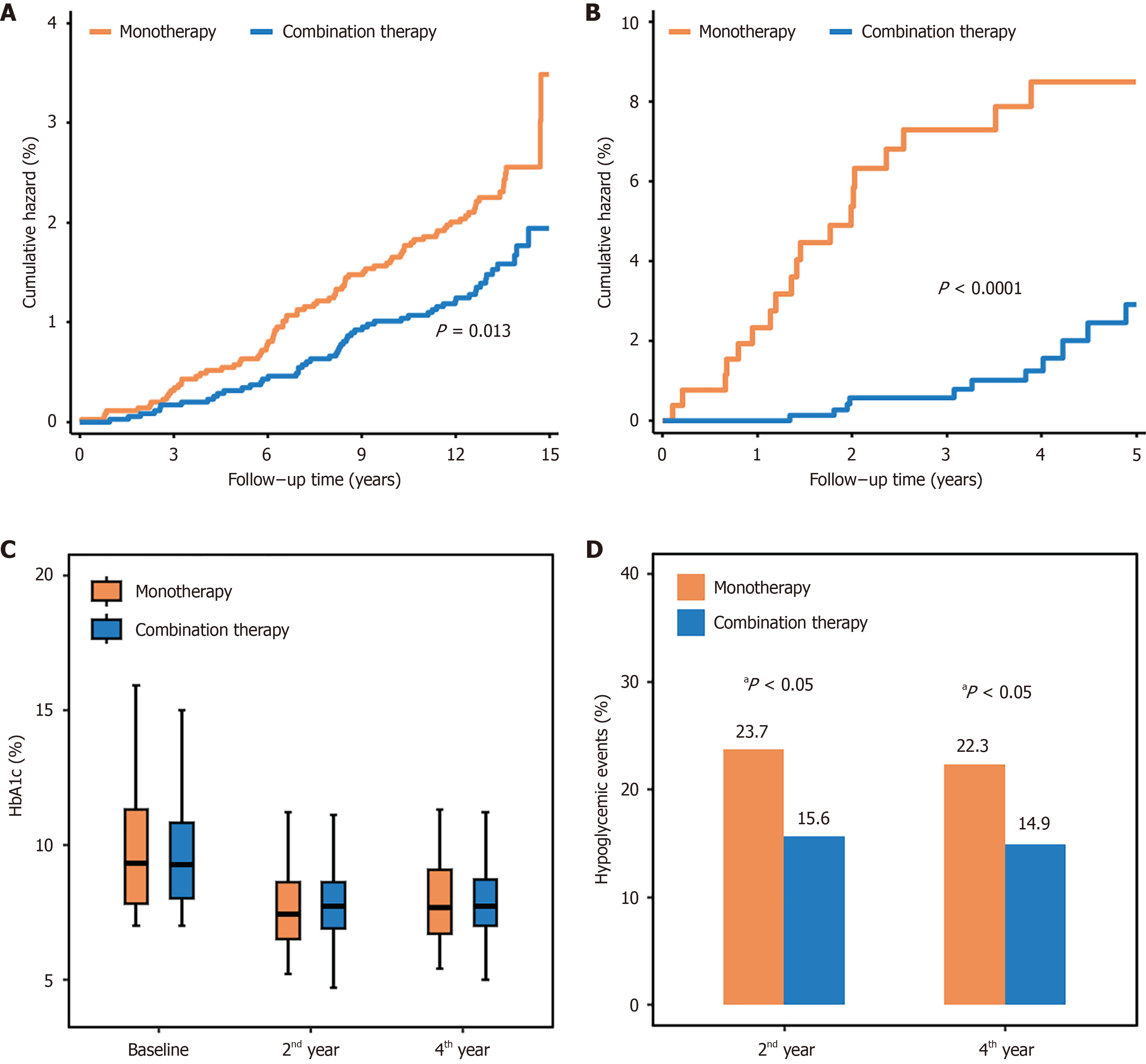
Figure 2 Risk of major adverse kidney events, changes of hemoglobin A1c, and hypoglycemic events among patients who received monotherapy and combination anti-diabetic therapy.
aP < 0.05. A: Kaplan-Meier curves of major adverse kidney events (MAKE) in UK biobank using a propensity score-matched method. Monotherapy: With a single anti-diabetic medication. Combination therapy: With ≥ 2 anti-diabetic medications. The MAKE is a composite of end-stage renal disease (defined as estimated glomerular filtration rate ≤ 15 mL/minute/1.73 m2, initiation of dialysis, or undergoing kidney transplantation) or death attributed to kidney disease; B: Kaplan-Meier curves of MAKE in Chongqing Diabetes Registry using an emulation design of randomized target trial; C: Follow-up hemoglobin A1c levels between monotherapy and combination therapy groups in Chongqing Diabetes Registry; D: Self-reported hypoglycemic events between monotherapy and combination therapy groups in Chongqing Diabetes Registry. Hypoglycemic events include self-monitored fasting blood glucose levels < 3.9 mmol/L, or the presence of hypoglycemic symptoms (e.g., palpitations, sweating) without blood glucose measurement, which resolve after food intake.
- Citation: Zhang SP, Huang TT, Zeng QL, Luo WJ, Xiong YJ, Peng C, Lian F, Cheng QF, Wang ZH, Huang W, Xu Y, Li QF, Yang SM, Chen XJ, Hu JB, Li XY. Higher diversity of anti-diabetic therapy is associated with lower risk of major adverse kidney events in diabetes. World J Diabetes 2026; 17(11): 123922
- URL: https://www.wjgnet.com/1948-9358/full/v17/i11/123922.htm
- DOI: https://dx.doi.org/10.4239/wjd.123922