
















Copyright: ©Author(s) 2026.
World J Diabetes. Nov 15, 2026; 17(11): 121630
Published online Nov 15, 2026. doi: 10.4239/wjd.121630
Published online Nov 15, 2026. doi: 10.4239/wjd.121630
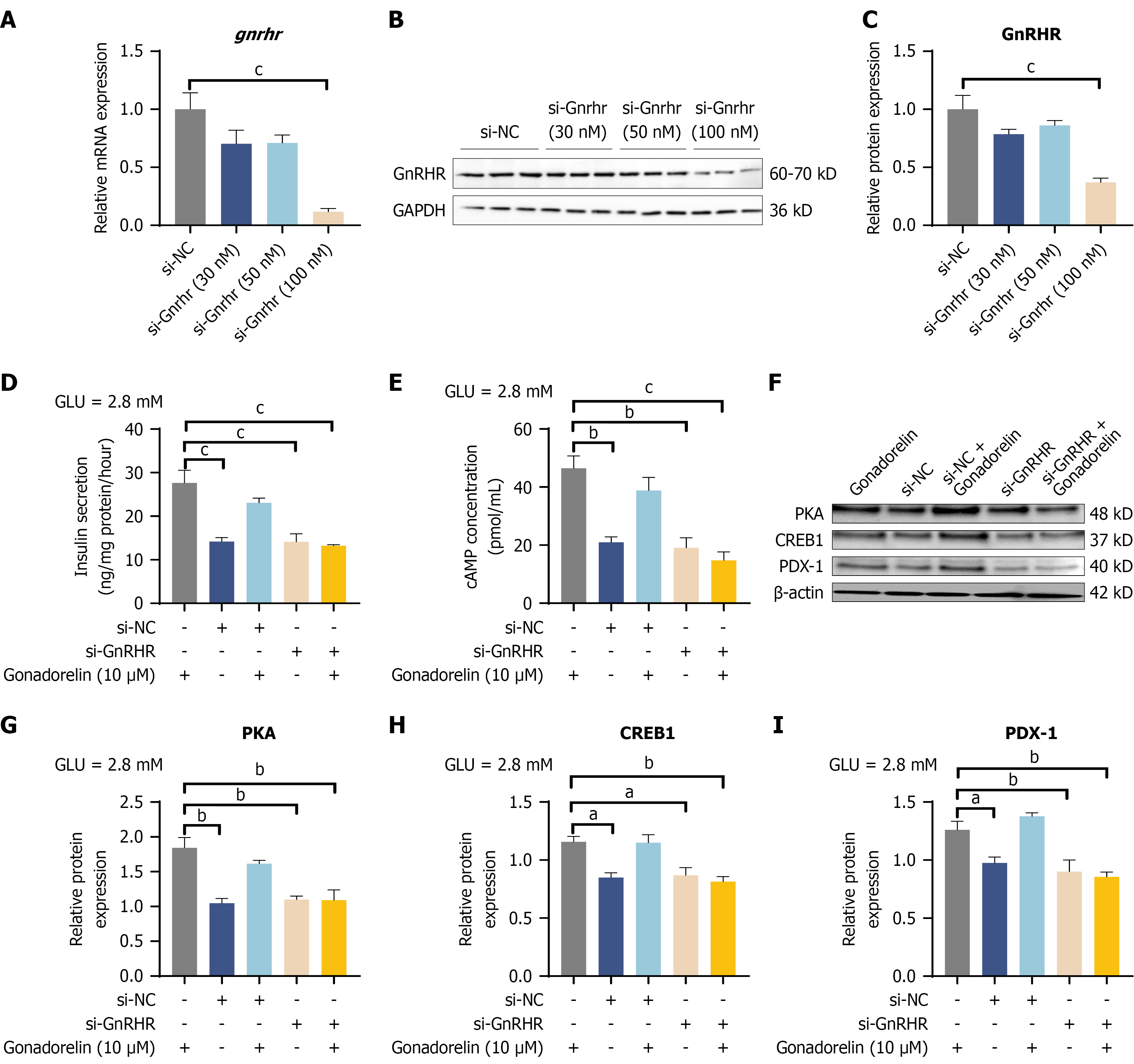
Figure 3 Requirement of gonadotropin-releasing hormone receptor for gonadorelin-mediated signaling and insulin secretion.
A-C: Validation of the knockdown efficiency of gonadotropin-releasing hormone receptor (GnRHR)-targeting small interfering RNA via western blotting in MIN6 cells; D: Effect of GnRHR silencing on the potentiation of insulin secretion by gonadorelin; E: Effect of GnRHR silencing on gonadorelin-induced intracellular cAMP production; F-I: Representative immunoblots and corresponding densitometric quantification demonstrating that GnRHR deficiency abolishes the gonadorelin-induced phosphorylation of PKA and CREB, as well as the upregulation of PDX1. Data are presented as the mean ± SEM (n = 3 independent biological replicates). aP < 0.05, bP < 0.01, and cP < 0.001. GnRHR: Gonadotropin-releasing hormone receptor.
- Citation: Dai XJ, Gao SC, Chen PT, Yang L, Kong CC, Ye CY, Xu ZX, Hu YX, He CY, Zuo ZH, Wang W. Postmenopausal high-gonadotropin-releasing hormone environment mediates pancreatic β-cell compensation via the cAMP-PKA-PDX1 pathway. World J Diabetes 2026; 17(11): 121630
- URL: https://www.wjgnet.com/1948-9358/full/v17/i11/121630.htm
- DOI: https://dx.doi.org/10.4239/wjd.121630