
















Copyright: ©Author(s) 2026.
World J Diabetes. Oct 15, 2026; 17(10): 125822
Published online Oct 15, 2026. doi: 10.4239/wjd.125822
Published online Oct 15, 2026. doi: 10.4239/wjd.125822
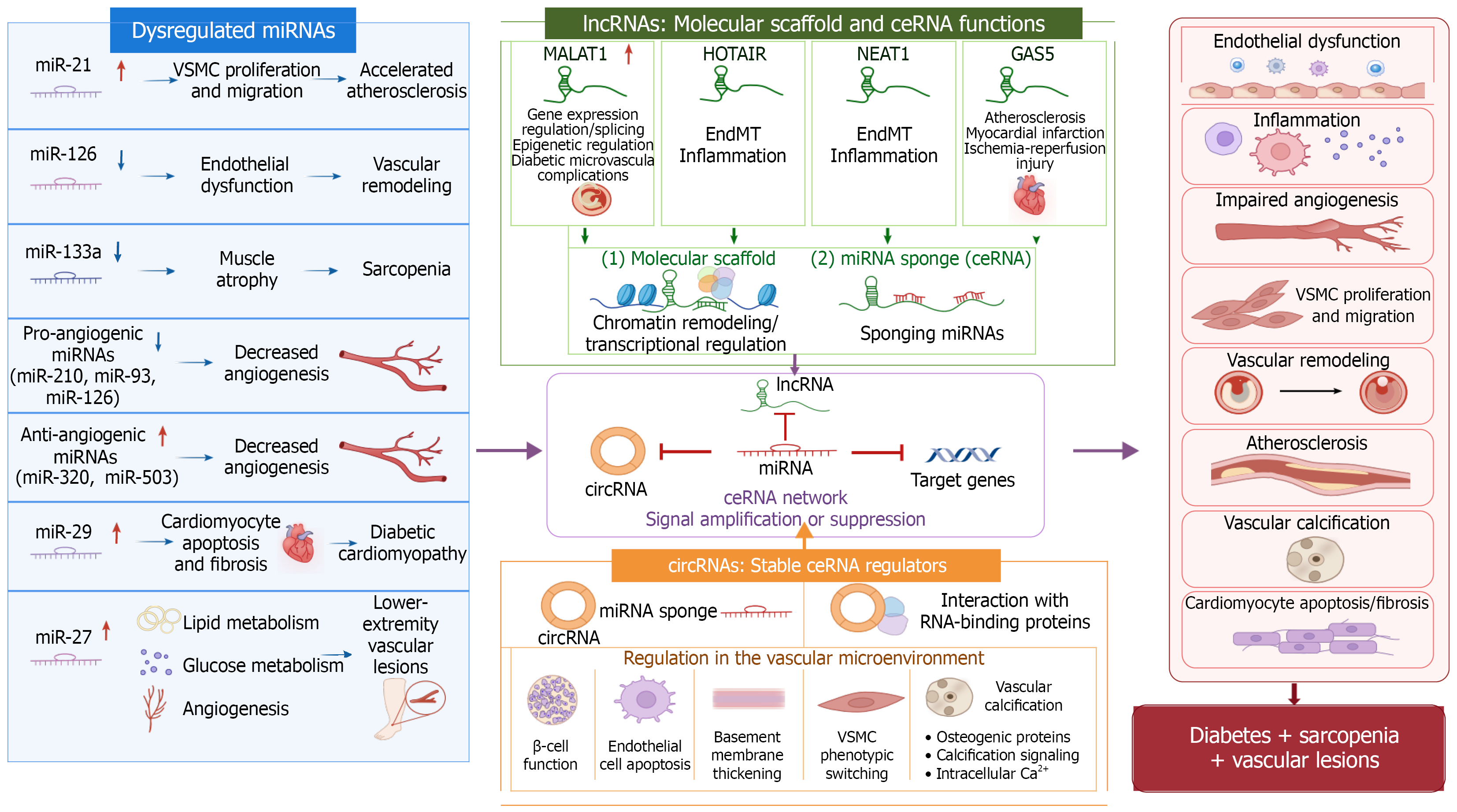
Figure 2 The key role of non-coding RNA regulatory networks in comorbidity-related vascular lesions.
This figure is produced using Adobe Illustrator and Biorender. Dysregulated miRNAs, long non-coding RNAs and circular RNAs form an integrated competing endogenous RNA regulatory network in diabetes-sarcopenia-associated vasculopathy. Dysregulation of miRNAs (such as miRNA-21, miRNA-126, miRNA-133a, miRNA-29 and miRNA-27), combined with the molecular scaffold function of long non-coding RNAs, the miRNA sponge effect and the role of circular RNAs as stable competing endogenous RNA regulatory factors, collectively regulate target genes. These non-coding RNAs collectively regulate endothelial dysfunction, inflammation, angiogenesis, vascular remodelling, atherosclerosis and vascular calcification, ultimately promoting the development of vascular complications in the context of diabetes-sarcopenia comorbidity. lncRNAs: Long non-coding RNAs; circRNAs: Circular RNAs; ceRNA: Competing endogenous RNA; VSMC: Vascular smooth muscle cell; MALAT1: Metastasis-associated lung adenocarcinoma transcript 1; HOTAIR: HOX transcript antisense RNA; NEAT1: Nuclear enriched abundant transcript 1; GAS5: Growth arrest-specific 5; EndMT: Endothelial-to-mesenchymal transition.
- Citation: Tang LY, Huang T, Li LY, Liu Y, Yang P, Zheng ZY, Wu HR, Zhang CX. Imbalances in RNA metabolic networks in vascular lesions associated with diabetes and sarcopenia. World J Diabetes 2026; 17(10): 125822
- URL: https://www.wjgnet.com/1948-9358/full/v17/i10/125822.htm
- DOI: https://dx.doi.org/10.4239/wjd.125822