
















Copyright: ©Author(s) 2026.
World J Diabetes. Oct 15, 2026; 17(10): 125822
Published online Oct 15, 2026. doi: 10.4239/wjd.125822
Published online Oct 15, 2026. doi: 10.4239/wjd.125822
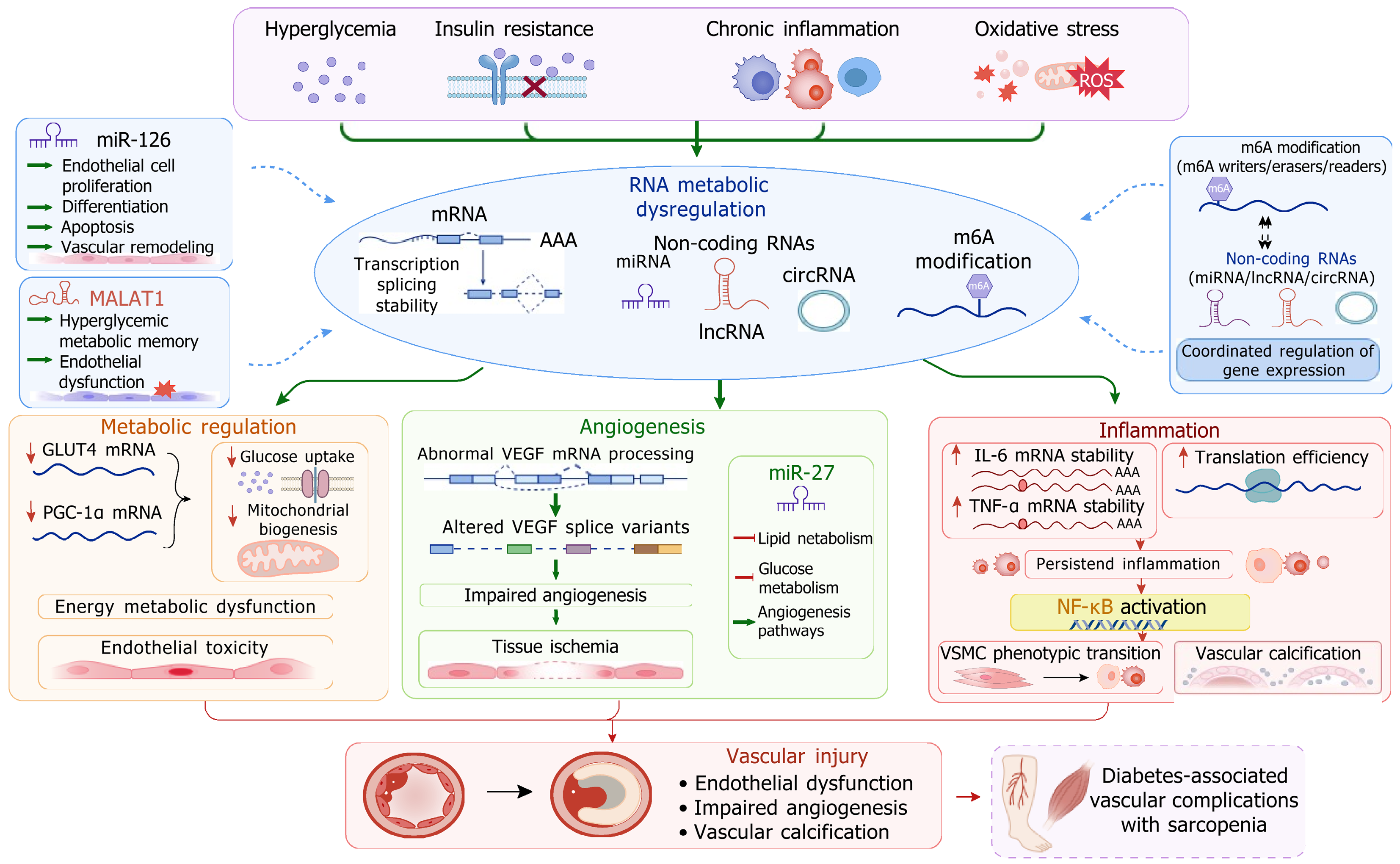
Figure 1 Imbalances in the RNA metabolic network as a molecular hub for comorbid vascular lesions.
This figure is produced using Adobe Illustrator and Biorender. Hyperglycaemia, insulin resistance, chronic inflammation and oxidative stress collectively drive dysregulation of the RNA metabolic network, involving dysregulation of miRNA (miRNA-126), long ncRNAs (metastasis-associated lung adenocarcinoma transcript 1) and circRNA expression, as well as abnormalities in epigenetic modifications such as m6A. This pivotal disruption subsequently triggers three downstream effects: Impaired metabolic regulation (such as downregulation of glucose transporter type 4 and peroxisome proliferator-activated receptor gamma coactivator 1-alpha mRNA, compromising glucose uptake and mitochondrial biosynthesis), impaired angiogenesis (abnormal splicing of vascular endothelial growth factor mRNA) and exacerbated inflammation (upregulation of interleukin-6 and tumor necrosis factor-alpha mRNA). These three pathways ultimately act synergistically on the vascular wall, leading to endothelial damage, smooth muscle cell phenotypic transformation and calcification, thereby accelerating the progression of diabetic vascular complications. MALAT1: Metastasis-associated lung adenocarcinoma transcript 1; GLUT4: Glucose transporter type 4; PGC-1α: Peroxisome proliferator-activated receptor gamma coactivator 1-alpha; VEGF: Vascular endothelial growth factor; IL-6: Interleukin-6; TNF-α: Tumor necrosis factor-alpha; NF-kB: Nuclear factor kappa B.
- Citation: Tang LY, Huang T, Li LY, Liu Y, Yang P, Zheng ZY, Wu HR, Zhang CX. Imbalances in RNA metabolic networks in vascular lesions associated with diabetes and sarcopenia. World J Diabetes 2026; 17(10): 125822
- URL: https://www.wjgnet.com/1948-9358/full/v17/i10/125822.htm
- DOI: https://dx.doi.org/10.4239/wjd.125822