
















©The Author(s) 2026.
World J Diabetes. Jan 15, 2026; 17(1): 110108
Published online Jan 15, 2026. doi: 10.4239/wjd.v17.i1.110108
Published online Jan 15, 2026. doi: 10.4239/wjd.v17.i1.110108
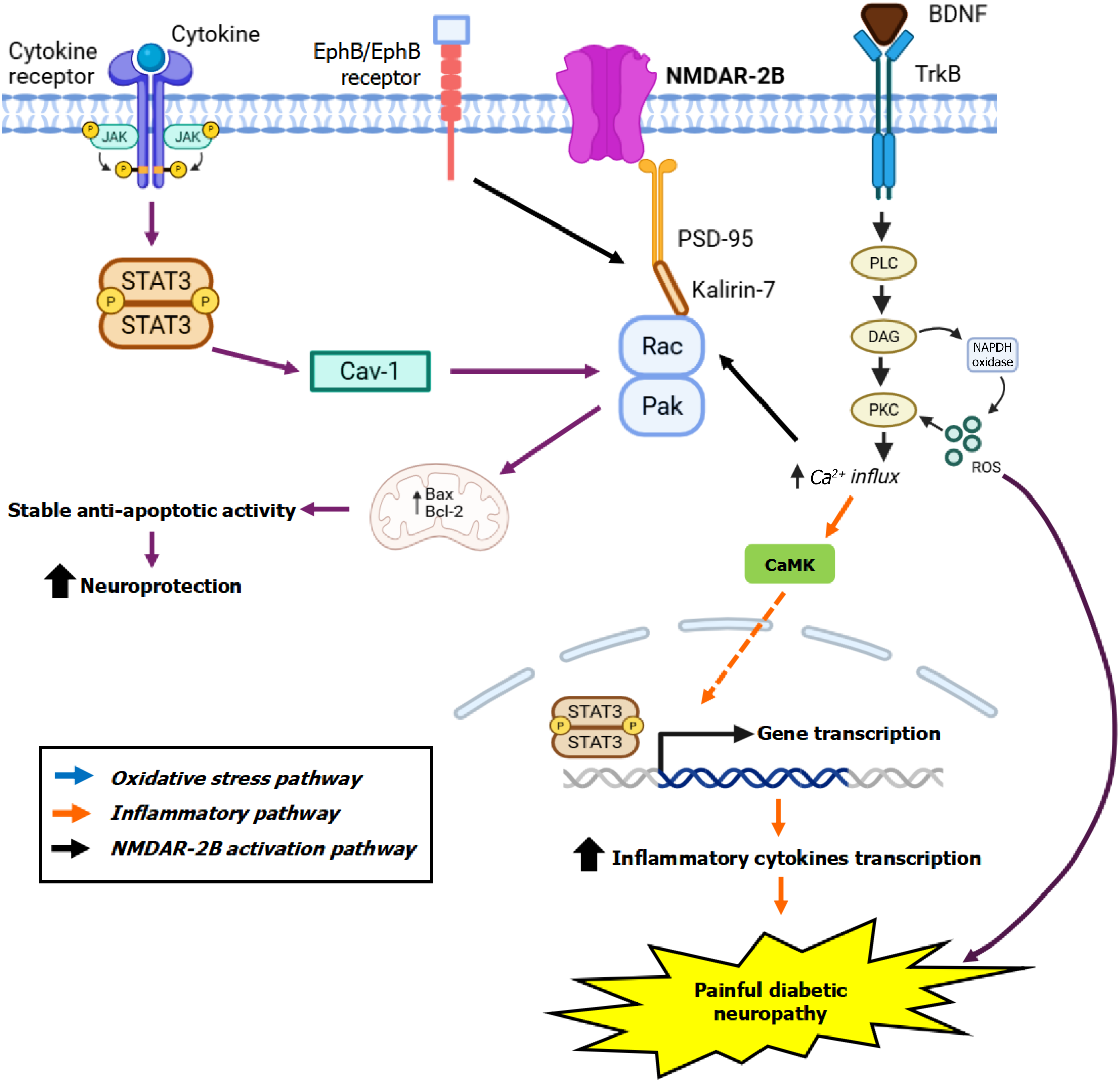
Figure 2 Possible mechanisms leading to N-methyl-D-aspartate receptor-2B activation in diabetic peripheral neuropathy.
Hyperglycaemia leads to the accumulation of glycolytic precursor diacylglycerol. The glycolytic precursor stimulates advanced glycation end product and reactive oxygen species formation by activating protein kinase C (PKC) and nicotinamide adenine dinucleotide phosphate (NADPH) oxidase. The activated PKC then stimulates N-methyl-D-aspartate receptor-2B (NMDAR-2B) activation and central sensitisation. Brain-derived neurotrophic factor (BDNF) may also activate NMDAR-2B through tyrosine kinase B (TrkB) receptor binding, which activates various phospholipase C (PLC)/diacylglycerol (DAG)/PKC and calmodulin-dependent protein kinase (CaMK) signaling pathways, leading to the development of neuropathy and transcription of various pro-nociceptive mediators, enhancing NMDAR-2B activation, resulting in central sensitisation and chronic pain. BAX: B-cell lymphoma-2 associated X protein; Bcl-2: B-cell lymphoma-2; Ca2+: Calcium ion; CAV-1: Caveolin-1; EphB: Ephrin B; JAK: Janus kinase; PaK: P21-activated kinase; PSD-95: Postsynaptic density protein 95; ROS: Reactive oxygen species; STAT3: Signal transducer and activator of transcription 3.
- Citation: Khalid N, Shafin N, Long I, Hasim H, Ismail CAN. Targeting N-methyl-D-aspartate 2B receptor in painful diabetic neuropathy – mechanisms, challenges, and emerging therapeutics. World J Diabetes 2026; 17(1): 110108
- URL: https://www.wjgnet.com/1948-9358/full/v17/i1/110108.htm
- DOI: https://dx.doi.org/10.4239/wjd.v17.i1.110108