
















©The Author(s) 2025.
World J Diabetes. Sep 15, 2025; 16(9): 110515
Published online Sep 15, 2025. doi: 10.4239/wjd.v16.i9.110515
Published online Sep 15, 2025. doi: 10.4239/wjd.v16.i9.110515
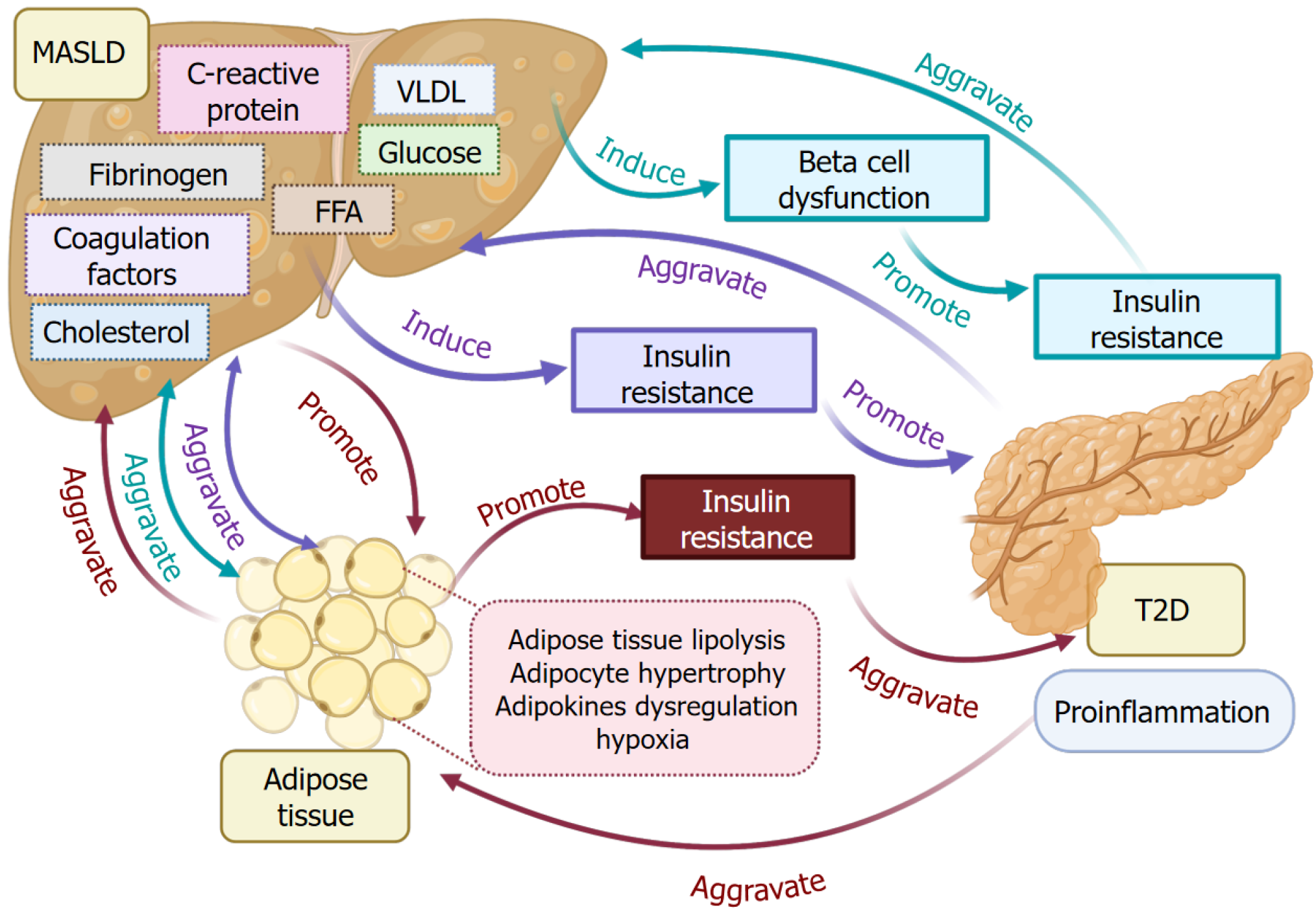
Figure 3 Metabolism function crosslinks among metabolic dysfunction-associated steatotic liver disease, type 2 diabetes, and adipose tissues.
Metabolic disorder induces alterations of energy metabolism, such as elevated levels of glucose, free fatty acid, very-low-density lipoprotein and cholesterol, C-reactive protein, coagulation factors, and fibrinogen in metabolic dysfunction-associated steatotic liver disease (MASLD) livers, beta cell dysfunction, and insulin resistance, causing type 2 diabetes (T2D) progression. T2D aggravates MASLD reciprocally. Meanwhile, the elevated metabolic factors also promote adipose tissue lipolysis, adipocyte hypertrophy, adipokine dysregulation, and hypoxia, which promote insulin resistance and aggregate MASLD. T2D-associated insulin resistance and inflammation aggravate adipose tissue metabolic dysfunction. T2D: Type 2 diabetes; MASLD: Metabolic dysfunction-associated steatotic liver disease; FFA: Free fatty acid; VLDL: Very-low-density lipoprotein.
- Citation: Zhang CY, Liu S, Yang M. Macrophage and inflammation in diabetes and metabolic dysfunction-associated steatotic liver disease: From mechanisms to therapeutic strategies. World J Diabetes 2025; 16(9): 110515
- URL: https://www.wjgnet.com/1948-9358/full/v16/i9/110515.htm
- DOI: https://dx.doi.org/10.4239/wjd.v16.i9.110515