
















©The Author(s) 2025.
World J Diabetes. Sep 15, 2025; 16(9): 110515
Published online Sep 15, 2025. doi: 10.4239/wjd.v16.i9.110515
Published online Sep 15, 2025. doi: 10.4239/wjd.v16.i9.110515
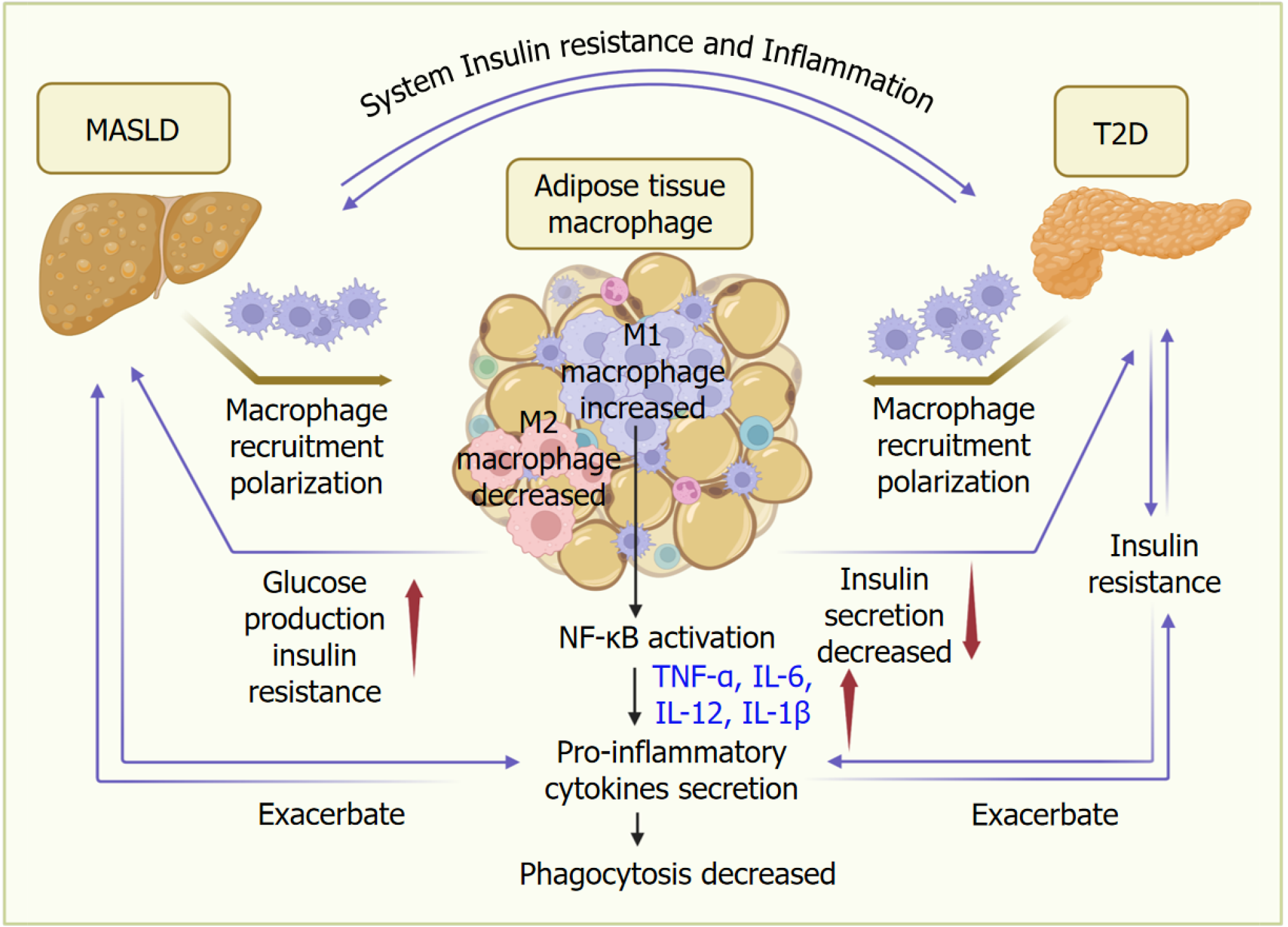
Figure 2 Adipose tissue macrophages play an essential role in the crosslink between metabolic dysfunction-associated steatotic liver disease and type 2 diabetes.
Adipose tissue macrophages play an essential role in connecting metabolic dysfunction-associated steatotic liver disease (MASLD) and type 2 diabetes (T2D). MASLD and T2D promote the recruitment and polarization of macrophages in adipose tissues. Upon polarization and activation of nuclear factor kappa-B, M1 macrophages increase the expression of proinflammatory cytokines, such as tumor necrosis factor-α, interleukin (IL)-12, IL-6, and IL-1β, which results in a decreased phagocytosis function of macrophages. Proinflammatory response in adipose tissues further exacerbates insulin resistance to promote T2D and MASLD development. Adipose tissue macrophages also contribute to the aggregation of T2D and MASLD by increasing glucose production and insulin resistance, as well as reducing insulin secretion. Through systemic inflammation and insulin resistance, MASLD and T2D interact with each other in a bidirectional way. T2D: Type 2 diabetes; MASLD: Metabolic dysfunction-associated steatotic liver disease; NF-κB: Nuclear factor kappa-B; IL: Interleukin; TNF: Tumor necrosis factor.
- Citation: Zhang CY, Liu S, Yang M. Macrophage and inflammation in diabetes and metabolic dysfunction-associated steatotic liver disease: From mechanisms to therapeutic strategies. World J Diabetes 2025; 16(9): 110515
- URL: https://www.wjgnet.com/1948-9358/full/v16/i9/110515.htm
- DOI: https://dx.doi.org/10.4239/wjd.v16.i9.110515