
















©The Author(s) 2025.
World J Diabetes. Sep 15, 2025; 16(9): 110515
Published online Sep 15, 2025. doi: 10.4239/wjd.v16.i9.110515
Published online Sep 15, 2025. doi: 10.4239/wjd.v16.i9.110515
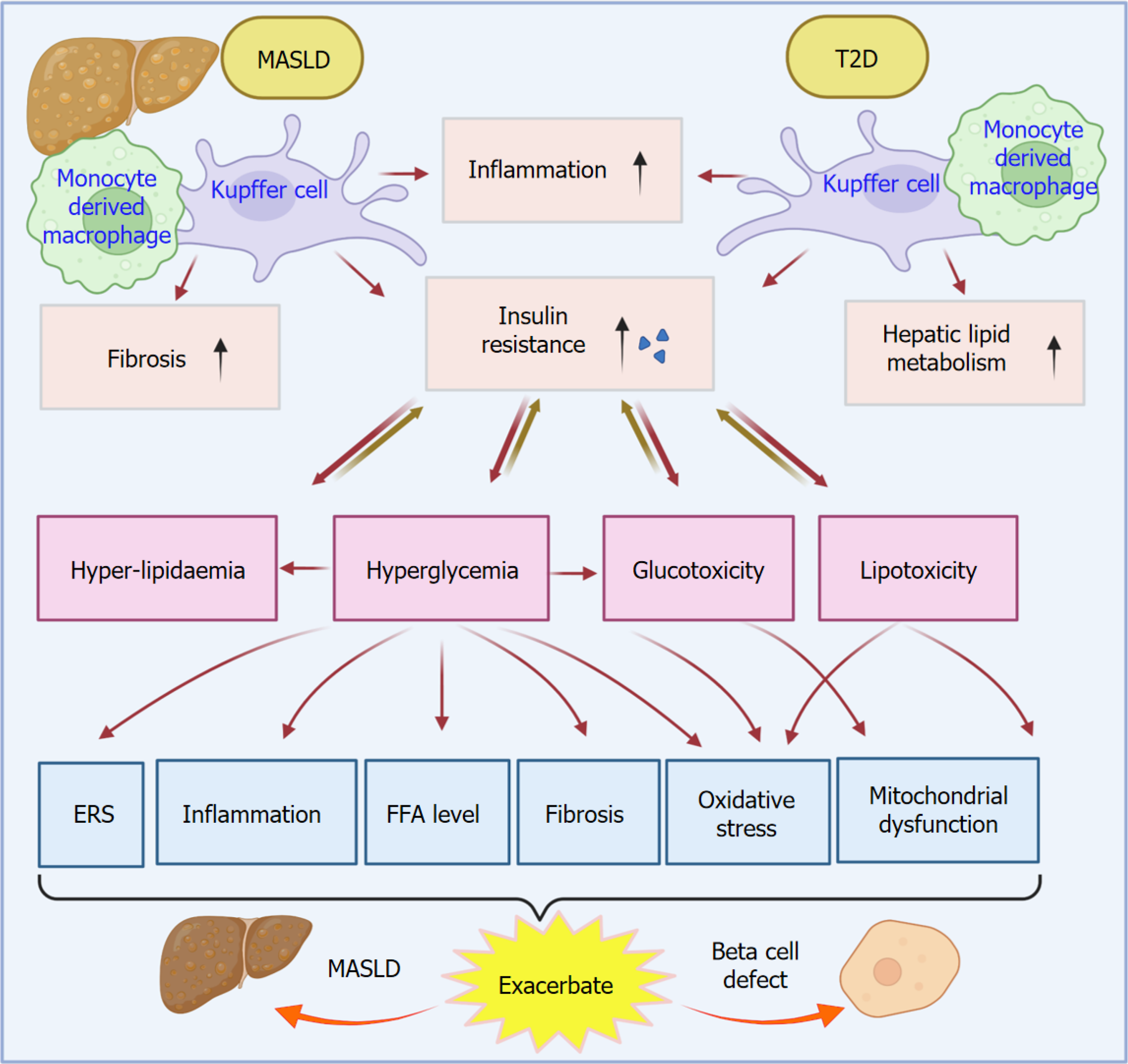
Figure 1 Liver resident macrophage, Kupffer cells, and monocyte-derived macrophages play an essential role in the crosslink of metabolic dysfunction-associated steatotic liver disease and type 2 diabetes.
Liver macrophages, including both liver-resident Kupffer cells and monocyte-derived macrophages, serve as a cellular link between metabolic dysfunction-associated steatotic liver disease (MASLD) and type 2 diabetes (T2D) through a variety of factors such as inflammation, insulin resistance, fibrosis, and hepatic lipid metabolism. The increased insulin resistance resulting from MASLD and T2D leads to hyperlipidemia, hyperglycemia, glucotoxicity, and lipotoxicity. These factors subsequently exacerbate the MASLD and beta cell defect by increasing endoplasmic reticulum stress, oxidative stress, inflammation, increased free fatty acid level, fibrosis, and mitochondrial dysfunction. T2D: Type 2 diabetes; MASLD: Metabolic dysfunction-associated steatotic liver disease; ERS: Endoplasmic reticulum stress; FFA: Free fatty acid.
- Citation: Zhang CY, Liu S, Yang M. Macrophage and inflammation in diabetes and metabolic dysfunction-associated steatotic liver disease: From mechanisms to therapeutic strategies. World J Diabetes 2025; 16(9): 110515
- URL: https://www.wjgnet.com/1948-9358/full/v16/i9/110515.htm
- DOI: https://dx.doi.org/10.4239/wjd.v16.i9.110515