
















©The Author(s) 2025.
World J Diabetes. Nov 15, 2025; 16(11): 112847
Published online Nov 15, 2025. doi: 10.4239/wjd.v16.i11.112847
Published online Nov 15, 2025. doi: 10.4239/wjd.v16.i11.112847
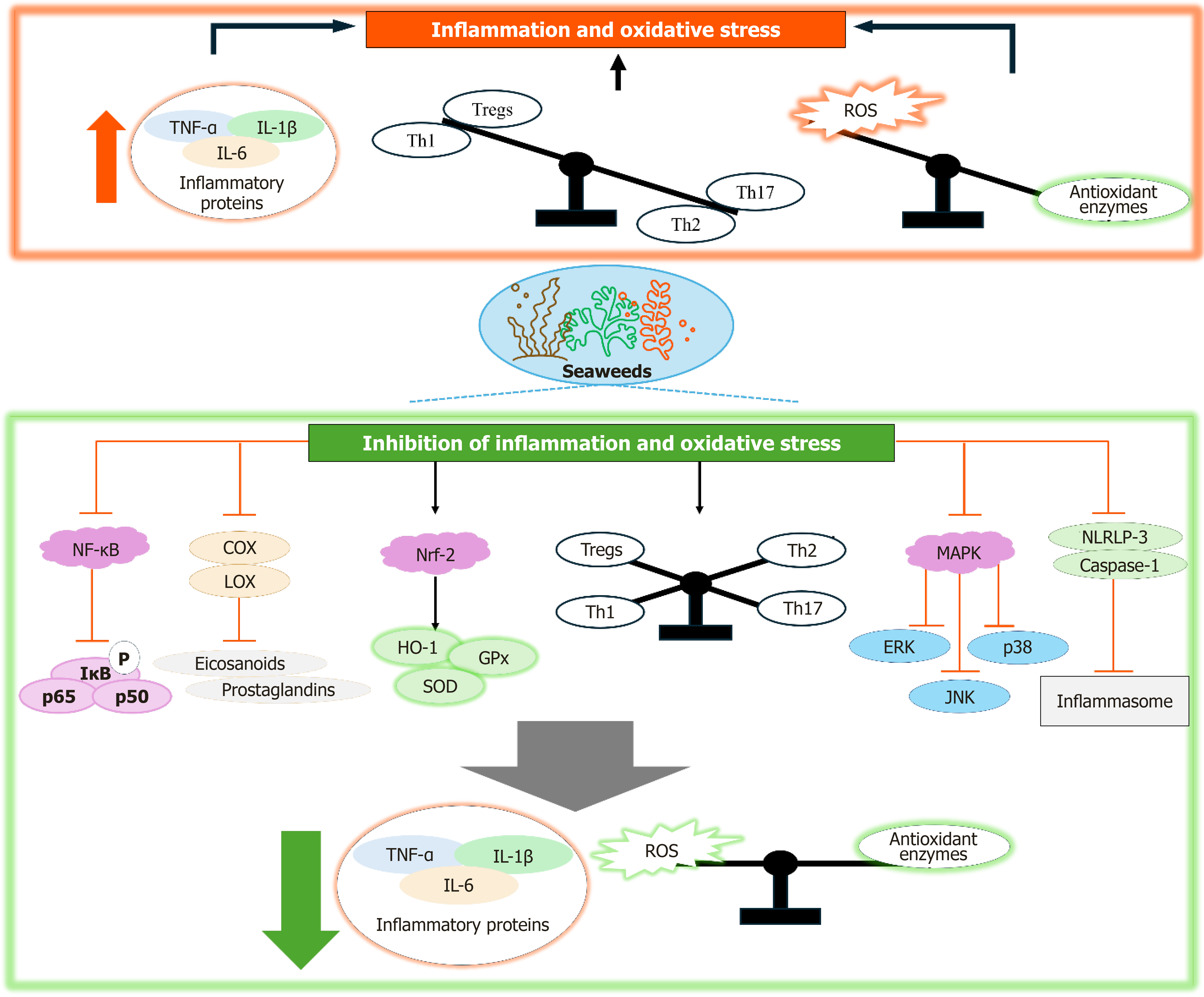
Figure 4 Inflammation and oxidative stress in diabetes and the inhibition of these processes by seaweeds and their compounds, involving mechanisms of action that modulate inflammatory pathways such as inhibition of nuclear factor kappa-B, cyclooxygenase, lipoxygenase, MAPK, NRLP-3, and caspase-1, and enhance antioxidant defense systems including nuclear factor erythroid 2-related factor 2 pathway.
NF-κB: Nuclear factor kappa-B; COX: Cyclooxygenase; LOX: Lipoxygenase; TNF-α: Tumor necrosis factor α; IL: Interleukin-6; Treg: Regulatory T cell; ROS: Reactive oxygen species; HO-1: Heme oxygenase-1; GPx: Glutathione peroxidase; SOD: Superoxide dismutase; ERK: Extracellular signal-regulated kinase; JNK: C-Jun N-terminal kinase; Nrf2: Nuclear factor erythroid 2-related factor 2.
- Citation: Magwaza SN, Islam MS. Mechanisms behind the anti-diabetic and anti-obesity effects of seaweeds or macroalgae and their bioactive compounds. World J Diabetes 2025; 16(11): 112847
- URL: https://www.wjgnet.com/1948-9358/full/v16/i11/112847.htm
- DOI: https://dx.doi.org/10.4239/wjd.v16.i11.112847