
















©The Author(s) 2025.
World J Diabetes. Nov 15, 2025; 16(11): 112236
Published online Nov 15, 2025. doi: 10.4239/wjd.v16.i11.112236
Published online Nov 15, 2025. doi: 10.4239/wjd.v16.i11.112236
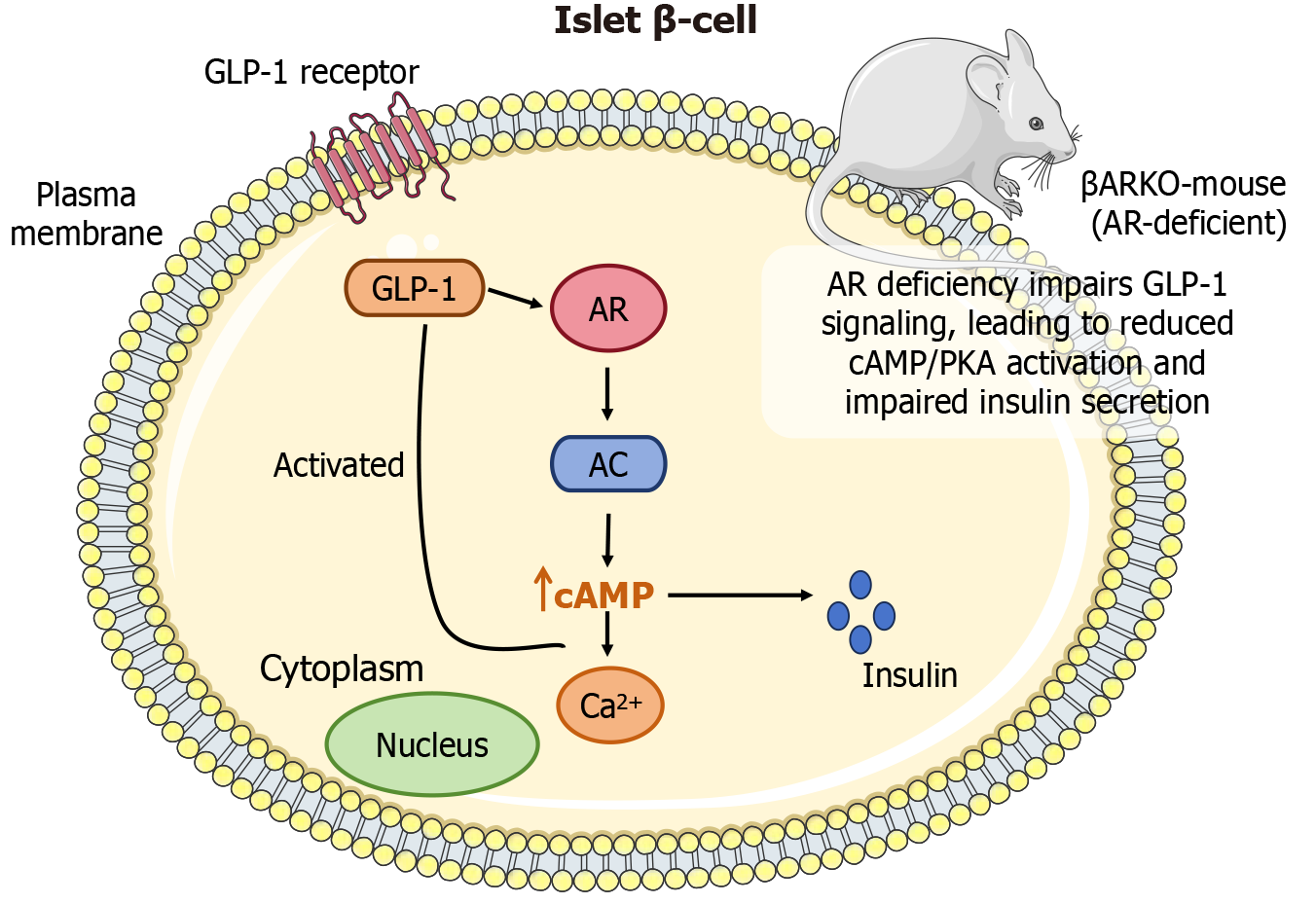
Figure 2 Androgen receptor enhances insulin secretion in pancreatic β-cells via nongenomic coactivation of the glucagon-1 receptor-cyclic adenosine monophosphate/protein kinase A signaling axis.
Upon binding to the glucagon (GLP)-1 receptor on the plasma membrane, GLP-1 stimulates adenylate cyclase through a stimulatory G alpha subunit-dependent mechanism, leading to the generation of cyclic adenosine monophosphate (cAMP), activation of protein kinase A (PKA), and an increase in cytosolic Ca2+, which together trigger insulin secretion. The dihydrotestosterone-activated androgen receptor, which is predominantly localized outside the nucleus, further enhances this pathway by recruiting additional stimulatory G alpha subunit proteins to amplify adenylate cyclase activity, thereby potentiating GLP-1-cAMP-PKA signaling and promoting insulin release. In β-cell-specific androgen receptor knockout mice, this amplification loop is disrupted, resulting in impaired GLP-1 signaling, a reduced cAMP/PKA response, abnormal Ca2+ dynamics, attenuated glucose-stimulated insulin secretion, and ultimately glucose intolerance. AR: Androgen receptor; DHT: Dihydrotestosterone; GLP-1: Glucagon-like peptide-1; GLP-1R: Glucagon-1 receptor; AC: Adenylyl cyclase; cAMP: Cyclic adenosine monophosphate; PKA: Protein kinase A; GSIS: Glucose-stimulated insulin secretion; βARKO: Β-cell-specific androgen receptor knockout; Gαs: Stimulatory G alpha subunit; AIS: Androgen insensitivity syndrome; iPSC: Induced pluripotent stem cell.
- Citation: Luo C, Zhang WW, Hua LY, Zeng MQ, Xu H, Duan CZ, Xu SY, Zhan S, Pan XF, Sun D, Ye LY, He DJ. Androgen receptor mutations in familial androgen insensitivity syndrome: A metabolic reprogramming pathway to type 2 diabetes susceptibility. World J Diabetes 2025; 16(11): 112236
- URL: https://www.wjgnet.com/1948-9358/full/v16/i11/112236.htm
- DOI: https://dx.doi.org/10.4239/wjd.v16.i11.112236