
















©The Author(s) 2025.
World J Diabetes. Nov 15, 2025; 16(11): 110428
Published online Nov 15, 2025. doi: 10.4239/wjd.v16.i11.110428
Published online Nov 15, 2025. doi: 10.4239/wjd.v16.i11.110428
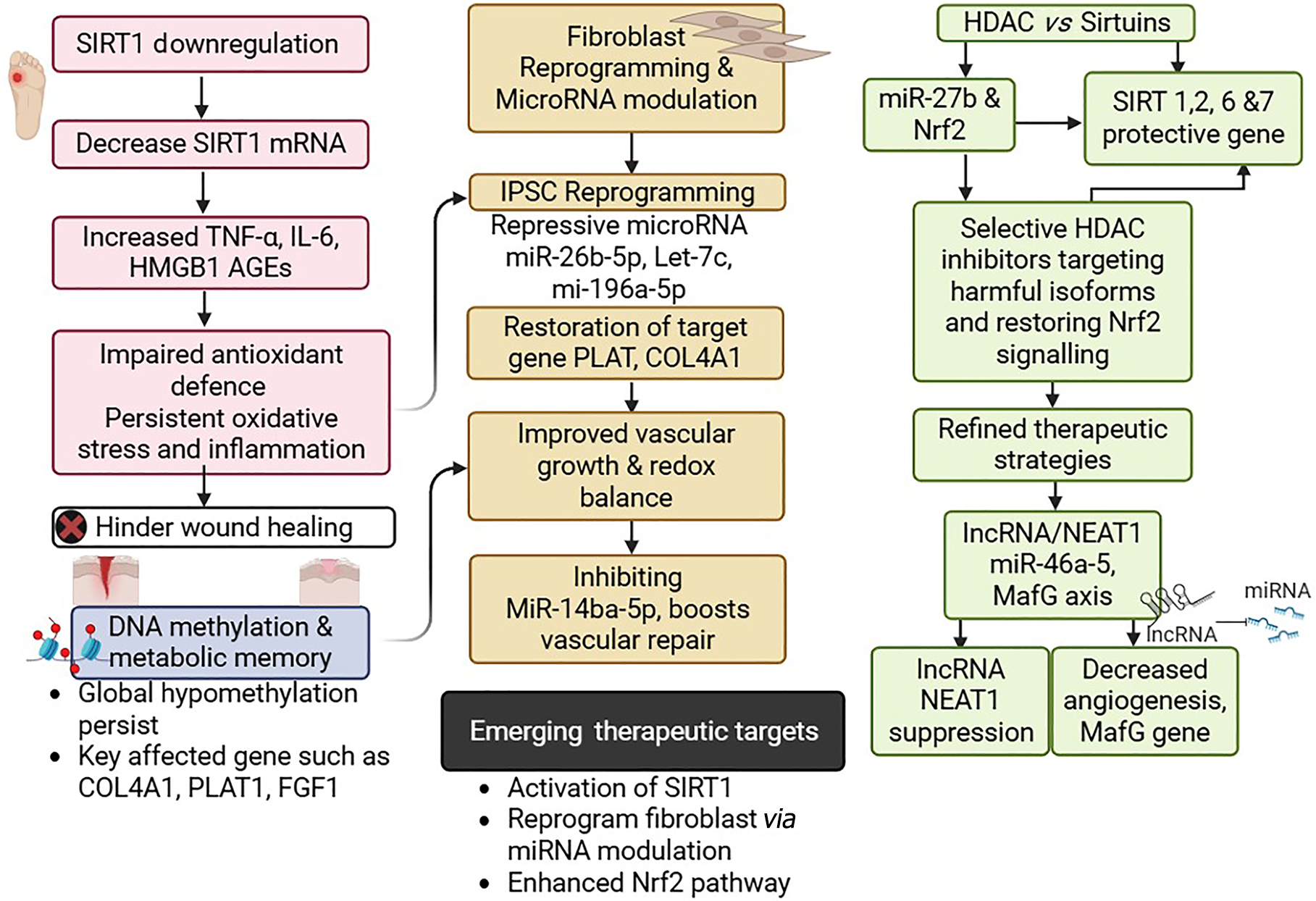
Figure 2 Epigenetic regulations in diabetic foot ulcer pathogenesis and healing.
SIRT1 downregulation leads to elevated pro-inflammatory mediators and oxidative stress, which impairs wound healing. Persistent DNA hypomethylation, despite normoglycemia, sustains metabolic memory and represses key reparative genes (e.g., collagen type IV alpha 1 [COL4A1], plasminogen activator, tissue type 1 [PLAT1], and fibroblast growth factor 1 [FGF1]). Reprogramming fibroblasts through modulation of microRNAs (e.g., miR-26b-5p, let-7c, miR-196a-5p) restores pro-repair gene expression, improves redox balance, and promotes vascular repair. Additionally, targeting the histone deacetylase (HDAC)–sirtuin axis via selective HDAC inhibition and enhancing Nrf2 signaling refines therapeutic strategies. Suppression of long non-coding RNA (lncRNA) nuclear enriched abundant transcript 1 (NEAT1) and modulation of the miR-46a-5–MafG axis further improve angiogenesis. Together, these insights identify promising therapeutic avenues.
- Citation: Sanusi KO, Asiwe JN, Sulaimon FA, Bashar F, Yusuf SK, Abdulkadir HO. Diabetic neuropathy and wound healing: An update on epigenetic crosstalk. World J Diabetes 2025; 16(11): 110428
- URL: https://www.wjgnet.com/1948-9358/full/v16/i11/110428.htm
- DOI: https://dx.doi.org/10.4239/wjd.v16.i11.110428