
















©The Author(s) 2025.
World J Diabetes. Nov 15, 2025; 16(11): 109859
Published online Nov 15, 2025. doi: 10.4239/wjd.v16.i11.109859
Published online Nov 15, 2025. doi: 10.4239/wjd.v16.i11.109859
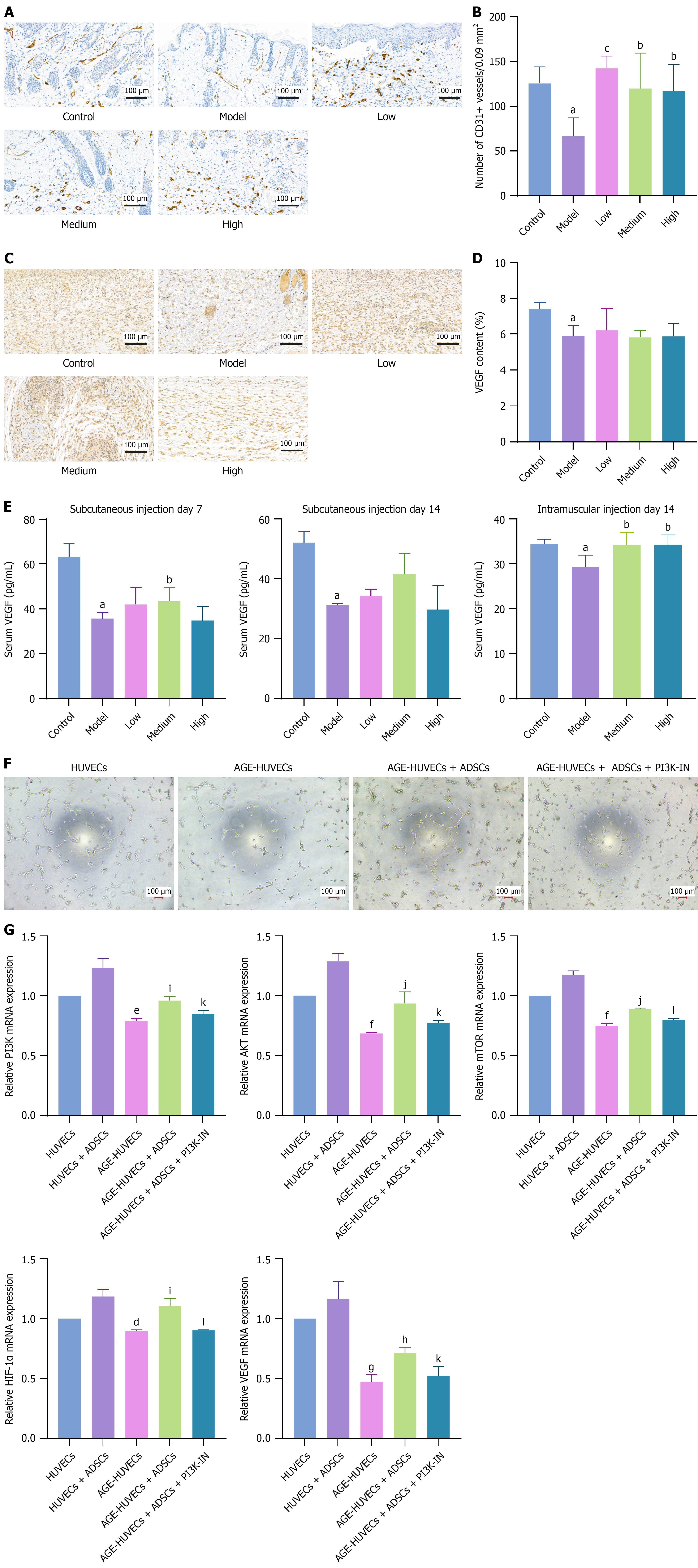
Figure 3 Effects of adipose-derived mesenchymal stem cells on angiogenesis in diabetic foot ulcers.
A: Immunohistochemical staining of CD31 in the wound beds of diabetic foot ulcer model mice on day 7 after subcutaneous adipose-derived mesenchymal stem cell (ADSC) administration; B: Quantification of blood vessels expressed as the number of CD31+ vessels in three random 0.3 cm × 0.3 cm fields, n = 5; C and D: Immunohistochemistry images and quantification of vascular endothelial growth factor (VEGF) by assessing integrated optical density, n = 5; E: Enzyme-linked immunosorbent assay was used to measure the serum VEGF concentration in diabetic foot ulcer model mice on days 7 and 14 after subcutaneous injection of ADSCs and on day 14 after intramuscular injection; F: A tube formation assay revealed that inhibition of the phosphatidylinositol 3-kinase signaling pathway impaired the proangiogenic effect of ADSCs in an advanced glycation end products (AGE) culture setting; G: Reverse transcription-quantitative polymerase chain reaction showed that ADSCs enhanced the phosphatidylinositol 3-kinase, protein kinase B, mammalian target of rapamycin, hypoxia-inducible factor-1α, and VEGF expression in human umbilical vein endothelial cells (HUVECs). AGE-HUVECs, HUVECs cultured in an AGE environment. The data are presented as mean ± SD. Scale bar, 100 μm. VEGF: Vascular endothelial growth factor; HUVEC: Human umbilical vein endothelial cell; ADSC: Adipose-derived mesenchymal stem cell; PI3K-IN: Phosphatidylinositol 3-kinase inhibitor; PI3K: Phosphatidylinositol 3-kinase; AKT: Protein kinase B; mTOR: Mammalian target of rapamycin; HIF-1α: Hypoxia-inducible factor-1α. aP < 0.05 vs control, bP < 0.05 vs model, cP < 0.01 vs model, dP < 0.05 vs human umbilical vein endothelial cells, eP < 0.01 vs human umbilical vein endothelial cells, fP < 0.001 vs human umbilical vein endothelial cells, gP < 0.0001 vs human umbilical vein endothelial cells, hP < 0.05 vs advanced glycation end products-human umbilical vein endothelial cells, iP < 0.01 vs advanced glycation end products-human umbilical vein endothelial cells, jP < 0.001 vs advanced glycation end products-human umbilical vein endothelial cells, kP < 0.05 vs advanced glycation end products-human umbilical vein endothelial cells + adipose-derived mesenchymal stem cells, and lP < 0.01 vs advanced glycation end products-human umbilical vein endothelial cells + adipose-derived mesenchymal stem cells.
- Citation: Cao J, Liu ZC, An WQ, Zhang S, Zhang X, Li LJ, Ji HL, Long X, Yang YM. Optimizing adipose-derived stem cell therapy for diabetic foot ulcers. World J Diabetes 2025; 16(11): 109859
- URL: https://www.wjgnet.com/1948-9358/full/v16/i11/109859.htm
- DOI: https://dx.doi.org/10.4239/wjd.v16.i11.109859