
















©The Author(s) 2025.
World J Diabetes. Oct 15, 2025; 16(10): 110041
Published online Oct 15, 2025. doi: 10.4239/wjd.v16.i10.110041
Published online Oct 15, 2025. doi: 10.4239/wjd.v16.i10.110041
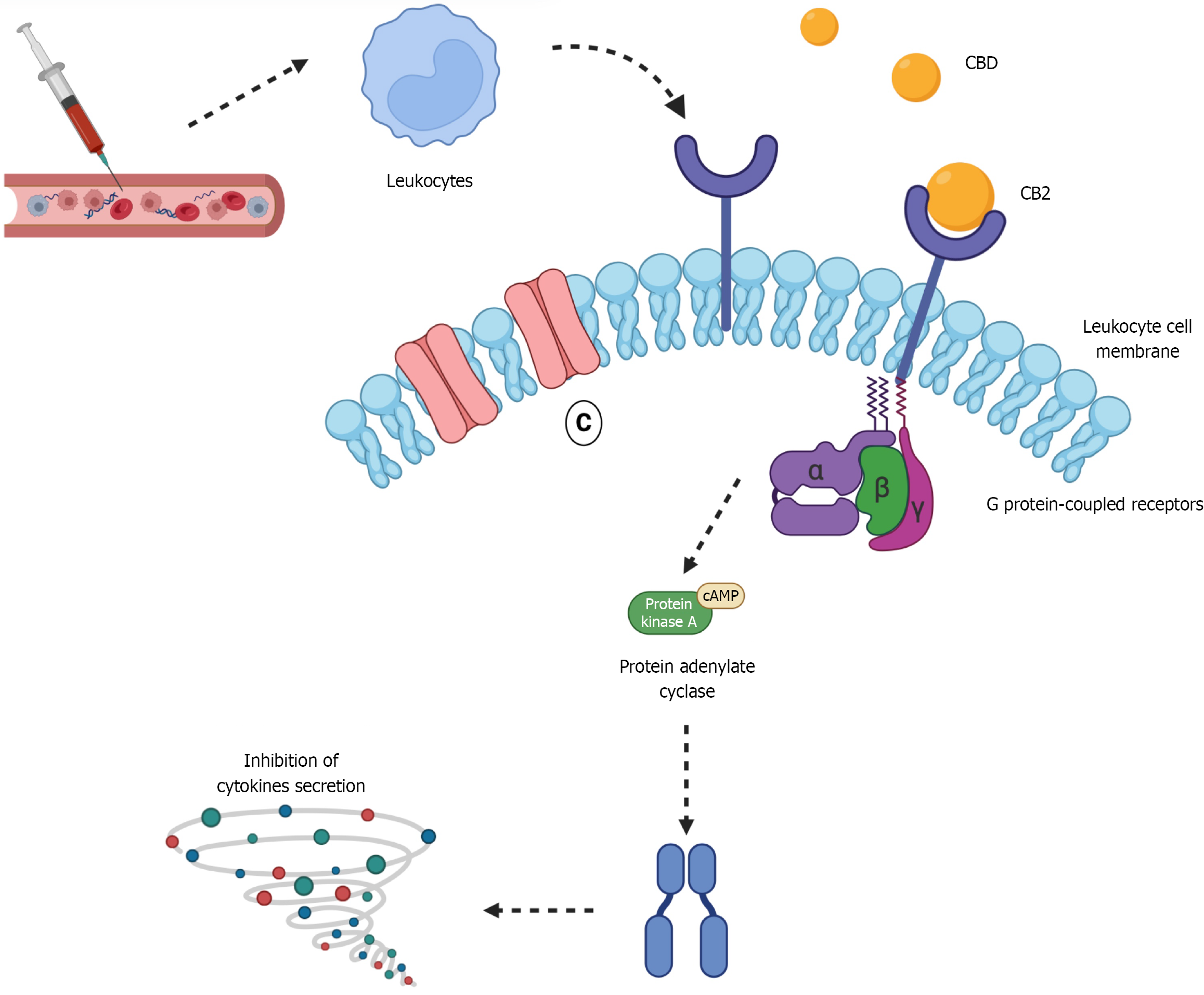
Figure 2 Cannabidiol activity on the cannabinoid receptor type 2 in leukocytes this figure illustrates the mechanism by which cannabidiol interacts with cannabinoid receptor type 2 Located on leukocyte membranes, emphasizing its role in modulating inflammation in type 1 diabetes mellitus.
Upon binding to cannabinoid receptor type 2 (CB2), cannabinoid (CBD) activates G protein-coupled signaling pathways that inhibit adenylate cyclase, without impacting calcium-dependent ion channels. This inhibition lowers intracellular cyclic adenosine monophosphate (cAMP) levels and reduces protein kinase A activity, ultimately leading to decreased production of proinflammatory cytokines (represented by the spiral icon), such as tumor necrosis factor alpha, interleukin 6 (IL-6), and IL-1β. Additionally, CBD may influence other inflammatory mediators, including nuclear factor kappa B and chemokines such as C-C motif chemokine ligand 2 and C-X-C motif chemokine ligand 10, suggesting a broader anti-inflammatory effect. Through these mechanisms, CBD contributes to the attenuation of pancreatic inflammation and the preservation of β-cell function in type 1 diabetes mellitus.
- Citation: Ramos Fernandes VA, Mendes LR, Franco Netto ROR, Belozo FL, Bezerra AA, dos Santos CPC, Cruel PTE, Buchaim DV, Buchaim RL, da Cunha MR. Anti-inflammatory effects of cannabidiol in the treatment of type 1 diabetes: A mini review. World J Diabetes 2025; 16(10): 110041
- URL: https://www.wjgnet.com/1948-9358/full/v16/i10/110041.htm
- DOI: https://dx.doi.org/10.4239/wjd.v16.i10.110041