
















©The Author(s) 2025.
World J Diabetes. Oct 15, 2025; 16(10): 109782
Published online Oct 15, 2025. doi: 10.4239/wjd.v16.i10.109782
Published online Oct 15, 2025. doi: 10.4239/wjd.v16.i10.109782
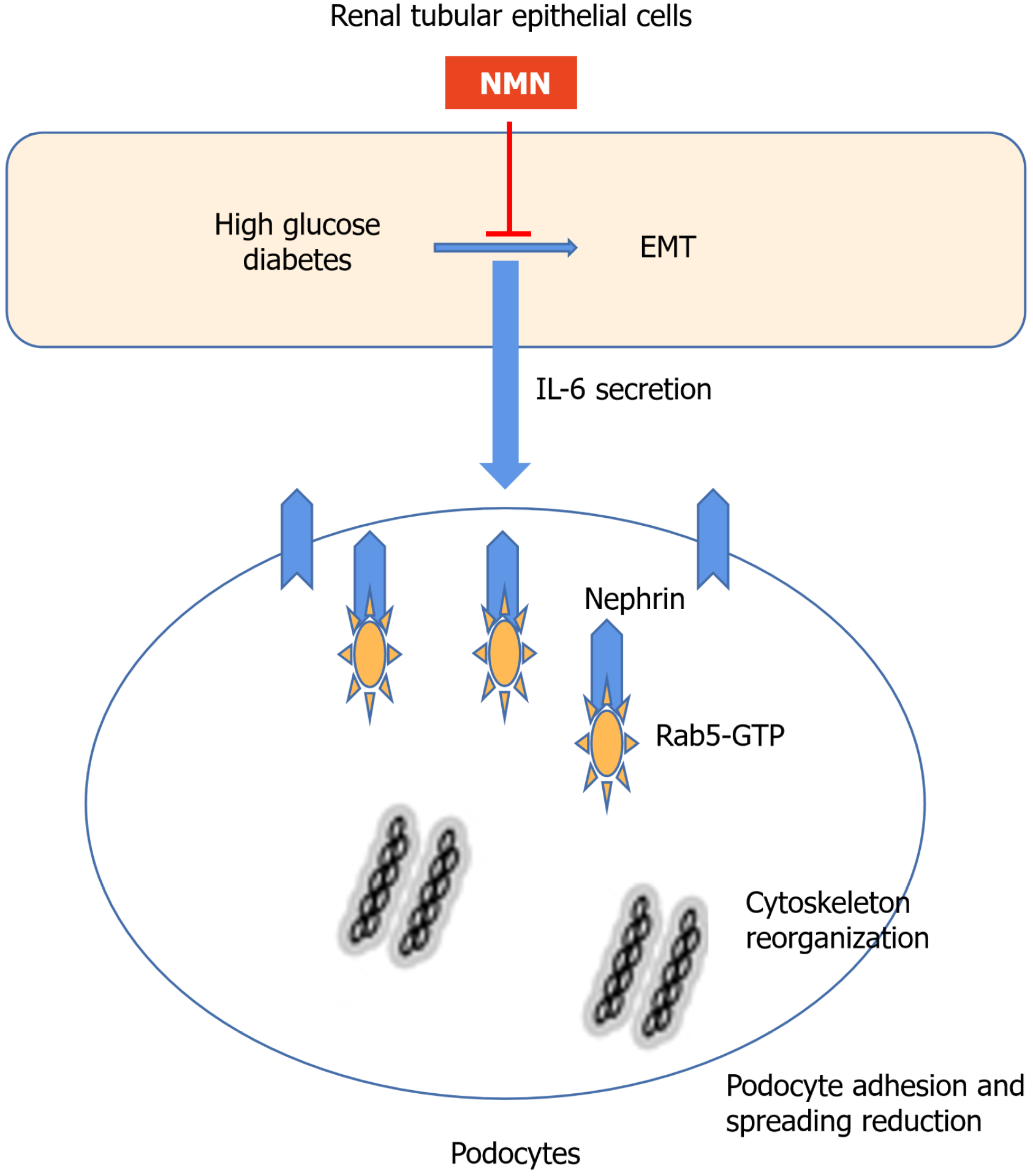
Figure 8 Possible mechanism of crosstalk between proximal tubular epithelial cells and podocytes and effect of nicotinamide mo
- Citation: Zha DQ, Gao P, Wu XY. Nicotinamide mononucleotide protects against diabetic nephropathy via IL-6/Rab5-mediated crosstalk between proximal tubular epithelial cells and podocytes. World J Diabetes 2025; 16(10): 109782
- URL: https://www.wjgnet.com/1948-9358/full/v16/i10/109782.htm
- DOI: https://dx.doi.org/10.4239/wjd.v16.i10.109782