
















©The Author(s) 2025.
World J Diabetes. Oct 15, 2025; 16(10): 108346
Published online Oct 15, 2025. doi: 10.4239/wjd.v16.i10.108346
Published online Oct 15, 2025. doi: 10.4239/wjd.v16.i10.108346
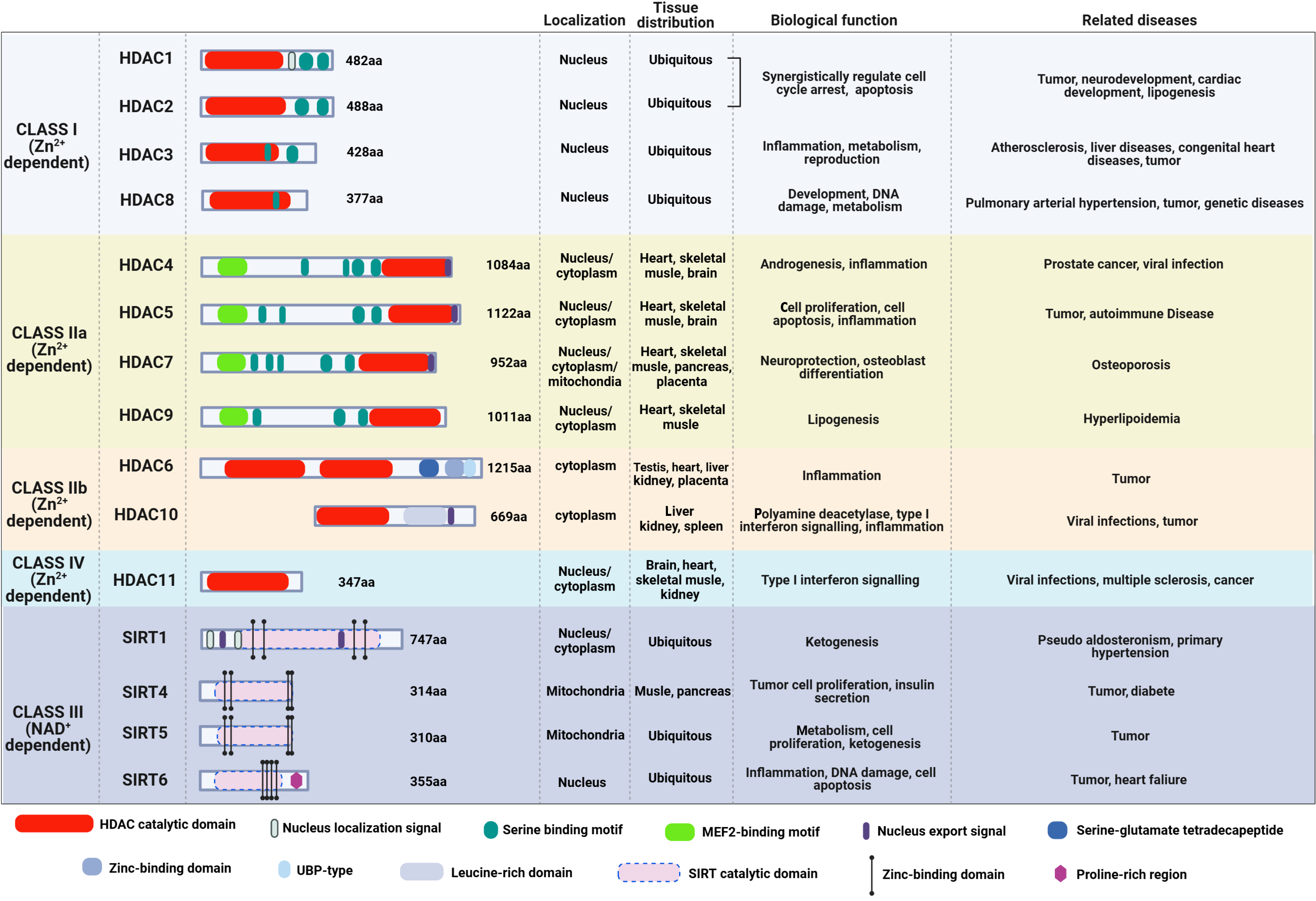
Figure 1 The structure, cellular localization, tissue distribution, biological functions, and related diseases of the four classes of histone deacetylases.
Class I, class II and class IV histone deacetylases (HDACs) are zinc ion-dependent, whereas class III HDACs are nicotinamide adenine dinucleotide-dependent. Class I HDACs are primarily distributed in the nucleus, and they are related to the pathogenesis of tumors, genetic diseases, and metabolic diseases. The Class IV HDAC is distributed in both the nucleus and cytoplasm, and it participates in the development of infectious diseases, nervous system diseases and tumors. Class II and class III HDACs are distributed in the nucleus, cytoplasm, and mitochondria, and they are involved in the pathogenesis of tumors, infectious diseases, metabolic diseases, and cardiovascular diseases. HDAC: Histone deacetylase; Zn2+: Zinc ion; SIRT: Sirtuin; NAD: Nicotinamide adenine dinucleotide; MEF2: Myocyte enhancer factor 2; UBP: Ubiquitin-specific proteases.
- Citation: Zhang F, Ma HG, Zhang B, Jiang LL, Nie KY, Deng CL, Liu Y. Potential roles of histone deacetylases in diabetic wound healing. World J Diabetes 2025; 16(10): 108346
- URL: https://www.wjgnet.com/1948-9358/full/v16/i10/108346.htm
- DOI: https://dx.doi.org/10.4239/wjd.v16.i10.108346