
















Copyright: ©Author(s) 2026.
World J Gastrointest Endosc. Sep 16, 2026; 18(9): 125352
Published online Sep 16, 2026. doi: 10.4253/wjge.125352
Published online Sep 16, 2026. doi: 10.4253/wjge.125352
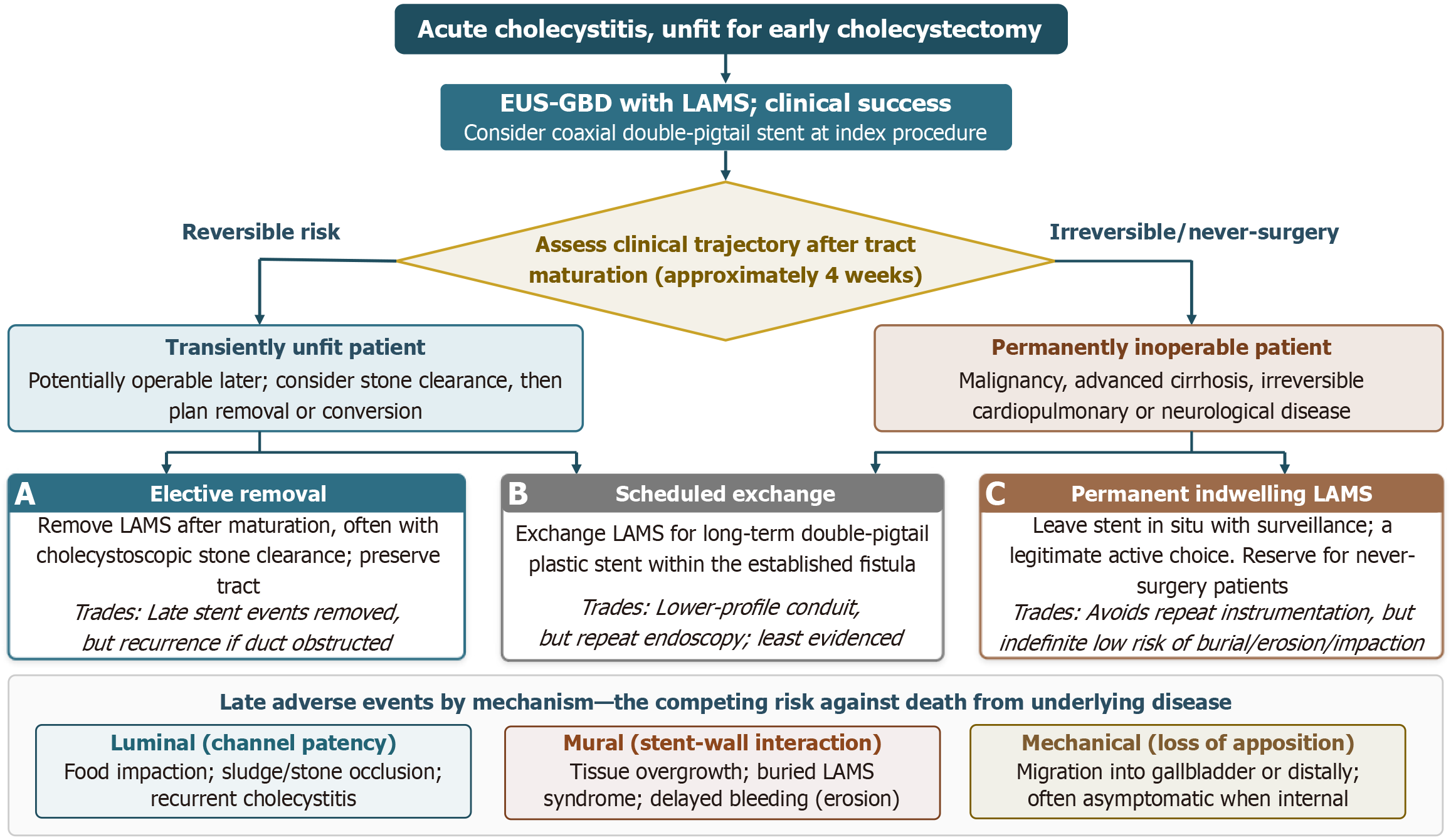
Figure 1 Trajectory-based framework for managing the indwelling lumen-apposing metal stent after endoscopic ultrasound-guided gallbladder drainage.
After clinical success, the clinical trajectory is reassessed at tract maturation. Patients temporarily unfit for surgery are directed toward stone clearance and planned removal or conversion, whereas permanently inoperable patients are candidates for retention with surveillance. Three strategies are shown alongside their respective risk trade-offs: A: Elective removal; B: Scheduled exchange for a long-term plastic stent; C: Permanent indwelling stent. The lower panel organizes late adverse events by mechanism (luminal, mural, or mechanical), framed against death from the underlying condition as the competing risk, which determines how much of the cause-specific hazard a patient survives long enough to experience. EUS-GBD: Endoscopic ultrasound-guided gallbladder drainage; LAMS: Lumen-apposing metal stent.
- Citation: Takahashi K, Minami N, Horie K, Sudo T, Yamada N, Iwanaga T, Sakuma T, Kamezaki H. Long-term lumen-apposing metal stents in endoscopic ultrasound-guided gallbladder drainage: Late adverse events and stent removal. World J Gastrointest Endosc 2026; 18(9): 125352
- URL: https://www.wjgnet.com/1948-5190/full/v18/i9/125352.htm
- DOI: https://dx.doi.org/10.4253/wjge.125352