
















Copyright: ©Author(s) 2026.
World J Gastrointest Endosc. Apr 16, 2026; 18(4): 117976
Published online Apr 16, 2026. doi: 10.4253/wjge.v18.i4.117976
Published online Apr 16, 2026. doi: 10.4253/wjge.v18.i4.117976
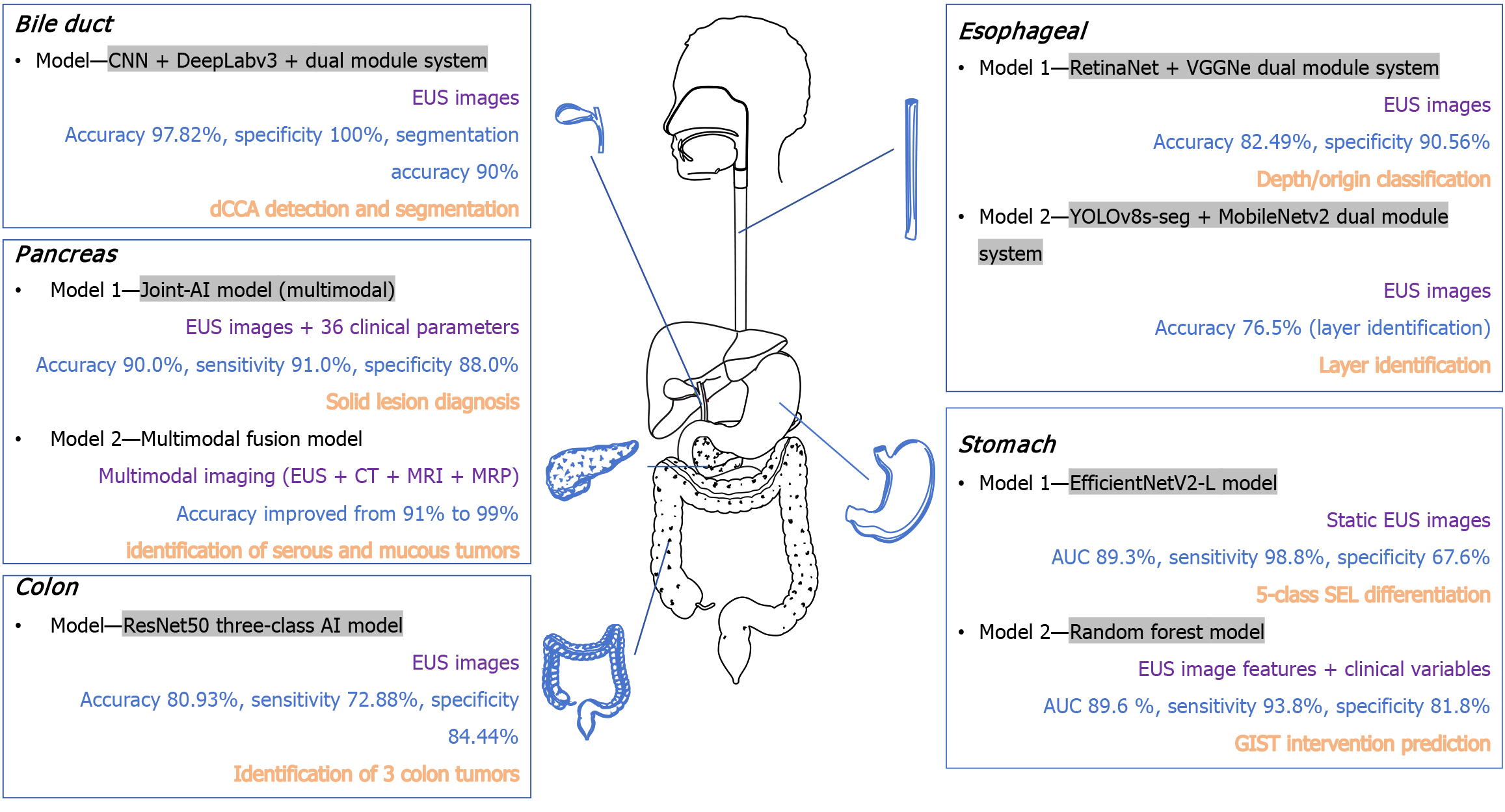
Figure 2 Distribution of artificial intelligence diagnostic models across the digestive system.
This figure summarizes representative artificial intelligence diagnostic models for endoscopic ultrasound, organized by anatomical location within the digestive tract. For each model, four key elements are presented: Model (grey background) specifies the algorithm architecture; data modality (purple) indicates the type of input data used; key metrics (blue) report the primary performance indicators; and application (orange) describes the diagnostic task. The models demonstrate the application of Artificial Intelligence across diverse gastrointestinal pathologies, including subepithelial lesions, tumors, and specific malignancies. AI: Artificial intelligence; AUC: Area under the curve; CNN: Convolutional neural network; CT: Computed tomography; dCCA: Distal cholangiocarcinoma; EUS: Endoscopic ultrasound; GIST: Gastrointestinal stromal tumor; MRI: Magnetic resonance imaging; MRP: Magnetic resonance pancreatography; SEL: Subepithelial lesions.
- Citation: Chen ZY, Wang YQ, Tan XZ, Liu P, Peng Y. Artificial intelligence in endoscopic ultrasound: Clinical translation of a prediction, navigation, and diagnosis framework. World J Gastrointest Endosc 2026; 18(4): 117976
- URL: https://www.wjgnet.com/1948-5190/full/v18/i4/117976.htm
- DOI: https://dx.doi.org/10.4253/wjge.v18.i4.117976